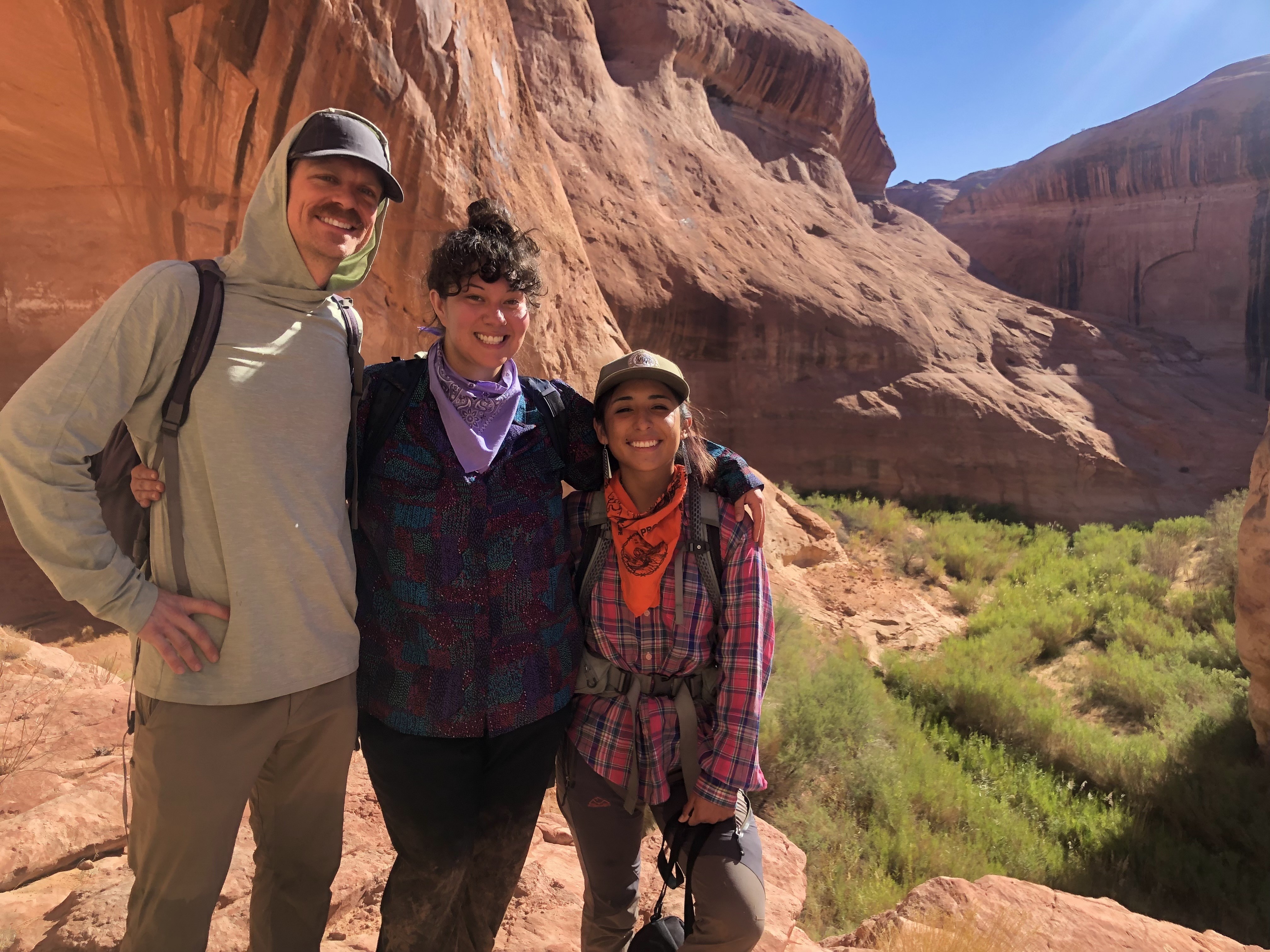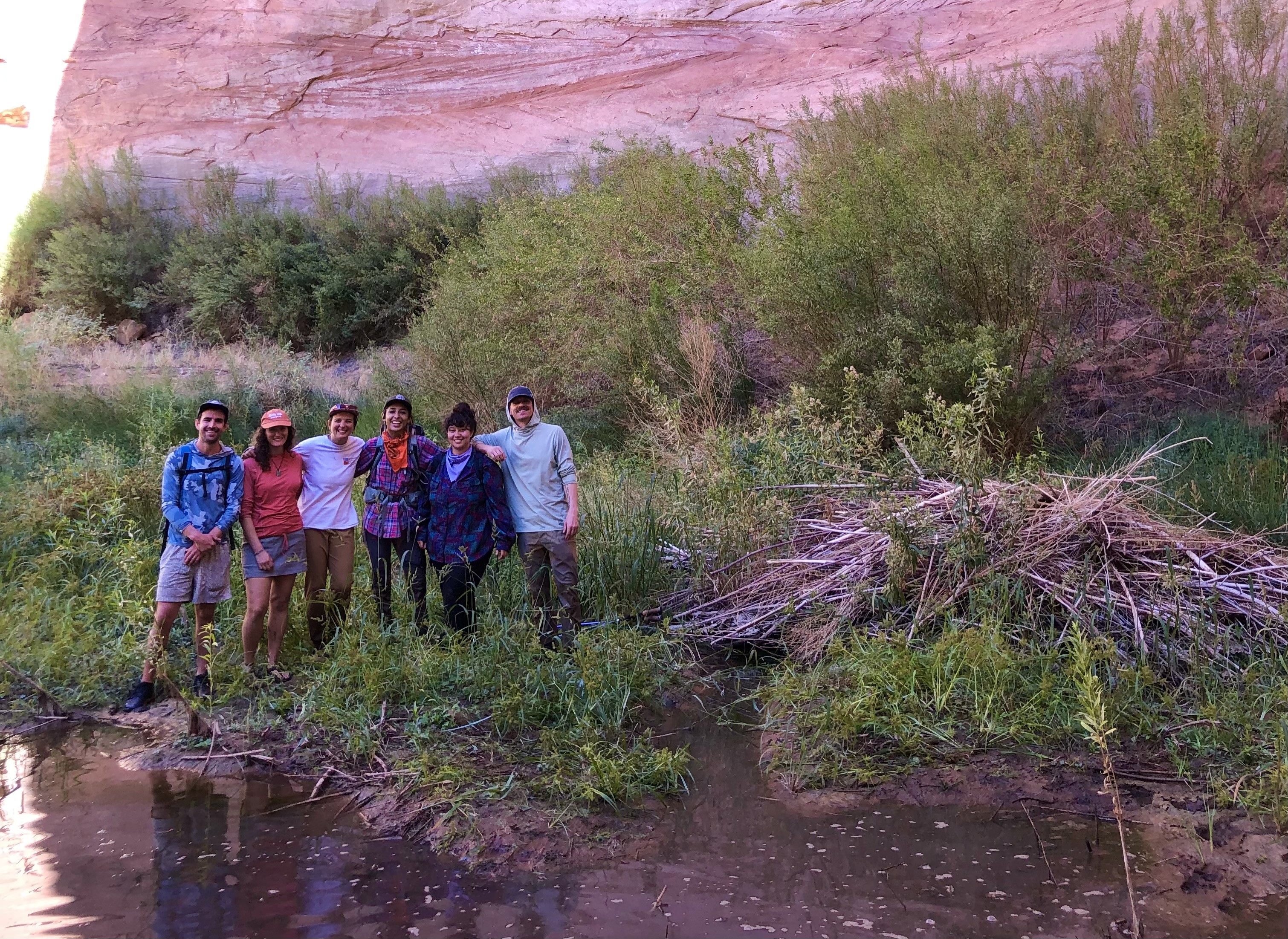
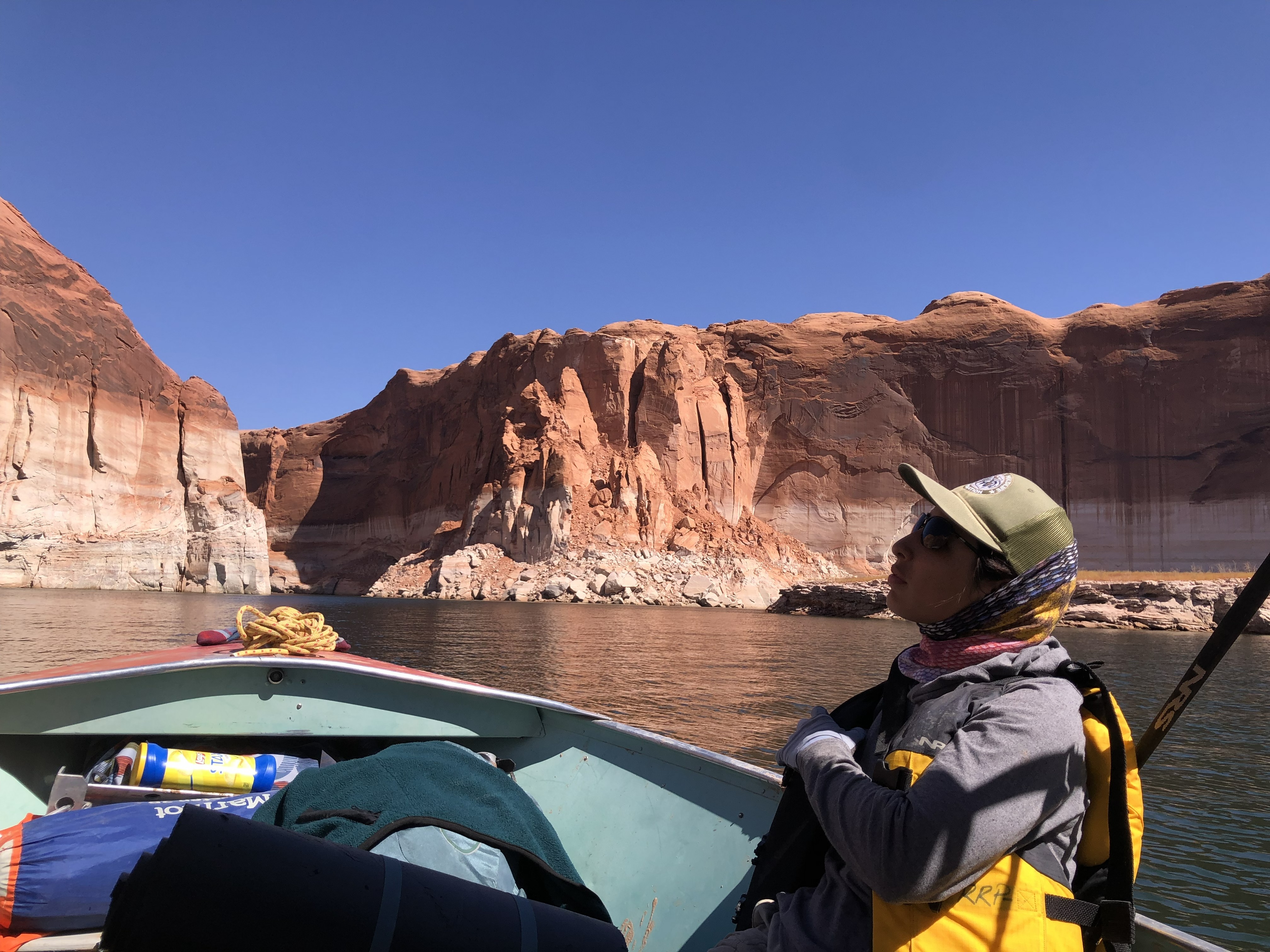
Where the reservoir meets the sandy delta and boat travel is no longer possible, the journey continues on-foot. We proceeded up through the canyons, wading through shallow, braided rivulets of Colorado River water. Just ahead, we would soon see for ourselves how life begins to flourish again. This is where beavers have made their home in Glen Canyon.
Searching for signs of beaver activity was the reason why my team from Watershed Management Group (WMG) had come. Glen Canyon Institute partnered with WMG because of our experience with leading a volunteer based, bi-national beaver survey on the San Pedro River in Arizona and Sonora, Mexico for the past 4 years. We traveled from Tucson, Arizona in the Sonoran Desert to Utah’s Red Rock Country, entering an environment we had never surveyed before.
The story of Glen Canyon is vastly different from that of the San Pedro River. Our desert river faces challenges antithetical to Glen Canyon—water scarcity and declining flow that threaten habitat and wildlife. In Glen Canyon, we have a completely different problem on our hands: too much water. Entire canyons, along with wildlife, plant communities, and ancestral and culturally significant sites were submerged to create the reservoir known as Lake Powell.
The canyons we visited had been underwater just a few years ago and now vast willow forests have emerged in these once-submerged canyons, thanks in part to the presence of beavers and the ecosystem services they provide. As ecosystem engineers, beavers slow and spread the flow of water by building natural dams, creating wetlands, and raising groundwater levels. Their hard work supports vegetation recovery and creates habitat for countless species. The emergence of these willow stands, along with the diverse range of species returning to them, reflects the ecological processes coming back to life as the reservoir drops.
Our goal on this trip was to survey five side canyons of Glen Canyon for signs of recent beaver activity to track the scale of ecological restoration taking place as water levels in Lake Powell recede. Beavers are an indicator species, meaning their presence or absence signals the condition of an ecosystem. They play a critical role in the health and function of each side canyon and the broader Glen Canyon landscape.
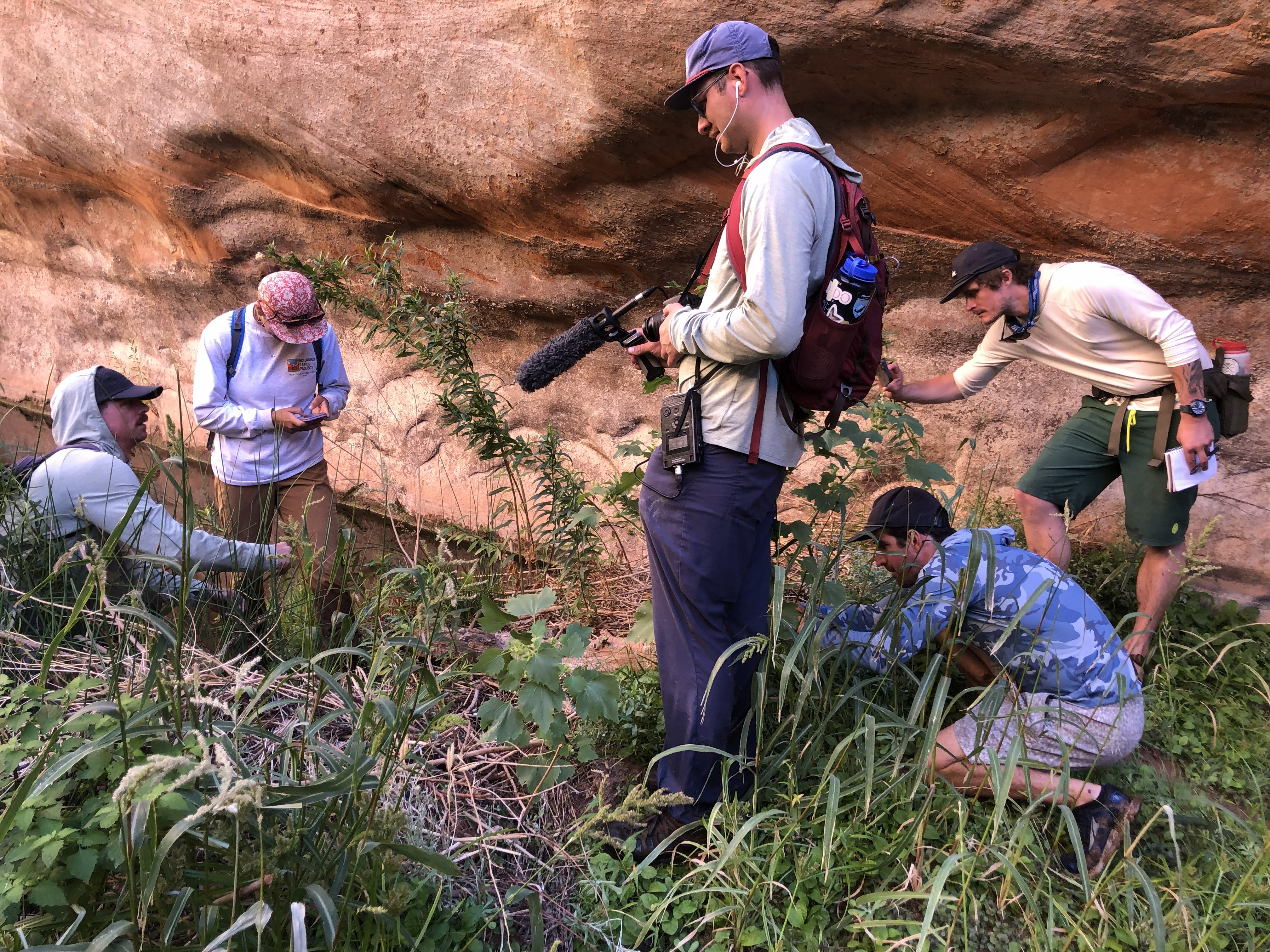
As Watershed Management Group’s Restoration Ecology Coordinator, much of my preparation focused on the logistical and scientific aspects of the survey; ensuring my crew and our partners at Glen Canyon Institute were ready to collect data using our digital survey on the app Survey123. Our methods focused on documenting recent signs of beaver activity including chews, dams, lodges, slides, scat, scent mounds, and tracks.
Yet amid all this planning, I also knew that entering Glen Canyon meant confronting a much deeper personal and cultural layer. As Diné, I was preparing to walk into a place where our ancestors, our stories, and our cultural sites were drowned beneath Lake Powell. For my own personal preparation, I was told to pray for the water, for protection, and for safe passage, because we would be surveying places where ancient people were buried. This journey was not only about searching for beavers for me—it was also about listening to the land, hearing its history, and honoring the landscape around us.
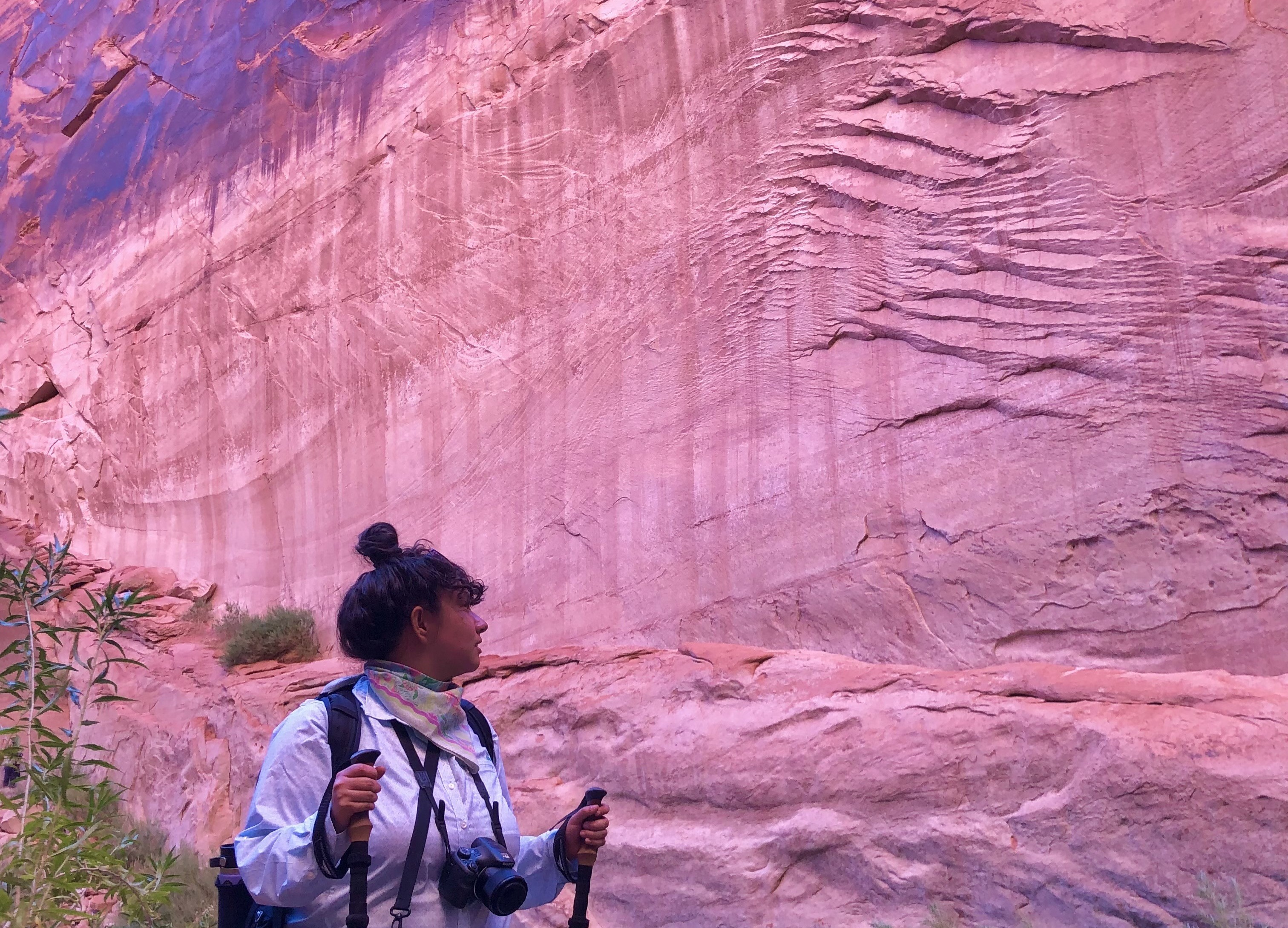
As we journeyed through four of the five side canyons for which we had permit access, we witnessed an ecosystem that had once been drowned but that is actively restoring itself. Riparian vegetation is re-emerging as water levels in the reservoir decline. Of the four canyons we surveyed, three showed recent beaver activity with active dams and ponds—a testament to the abundance of vegetation available for beavers to feed on and use in building their dams and lodges. Multiple beaver family groups are estimated to be dispersed throughout the side canyons we surveyed.
In talking with my WMG survey crew and best friends, Lizbeth Perez (River Restoration Apprentice) and Jace Lankow (Desert Rivers Restoration Manager), both shared how our beaver survey trip was a life-changing experience for them—not just professionally or scientifically, but also on a deeply personal level. Their reflections remind us that science and recreation are not the only ways to connect with a place. Being on the land can lead to a deeper awareness of our connection to it and of the stories that the landscape holds, we only have to take the time to listen.
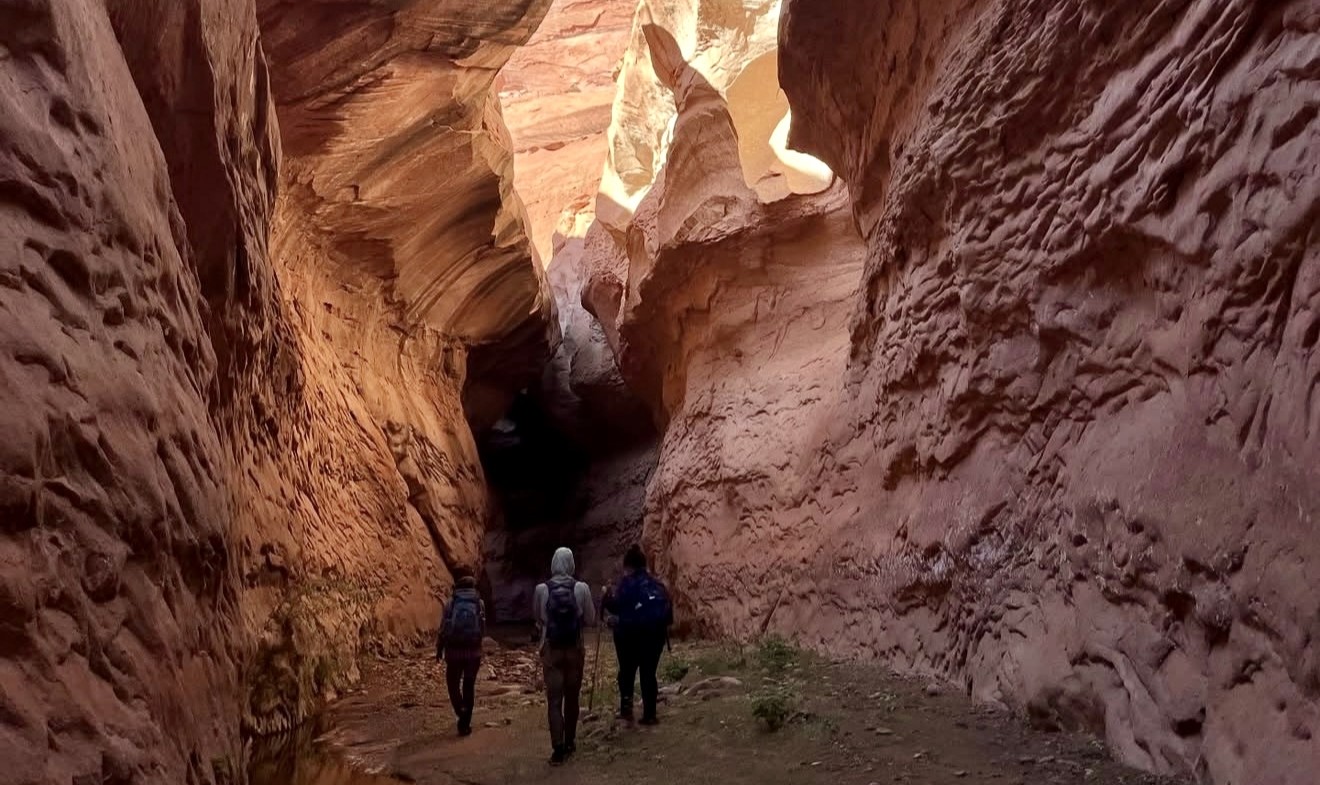
Jace was especially struck by the beauty and resilience of the side canyons. Even with the stark reminder of the “bathtub ring” marking full-pool, the flourishing plant life below it told a story of recovery. He spoke about how, even amid the activity of Lake Powell’s boat traffic, stepping into the side canyons felt like slipping into true remoteness. He expected to focus mainly on completing the survey but instead found himself absorbing the history of Glen Canyon Dam, western water rights, and the advocacy by Glen Canyon Institute.
Lizbeth shared that the trip changed something in her, too. She saw the potential for thriving riparian habitat that has been suppressed for decades by the reservoir. For her, witnessing a landscape actively recovering and seeing beavers doing restoration work on their own, and for free, shifted her perspective. She told me she has often felt pessimistic, even heartbroken, about the damage humans leave on the land. But Glen Canyon, and the beavers returning to it, showed her that not all hope is lost.
Witnessing the resilience of Glen Canyon and the return of life in addition to beavers, reminded us that hope never dies, and neither do landscapes.