Have you ever wondered what the Santa Cruz river looked like in the past, when it used to flow? We had the exciting opportunity to see what a desert riparian forest looks like in its beginning stages of recovery. Just before sunset on Tuesday, May 26th, 2026, Watershed staff and River Run Network members and volunteers gathered on the west side of Tucson at the Santa Cruz River north of Irvington Road and I-19 near the Tucson Airport Remediation Project (TARP) water treatment plant. Welcomed by the buzz of summer cicadas and dragonflies gliding overhead, the group set up their smartphones and devices with the survey app before descending into the riverbed to conduct a plant count of the newly growing riparian forest connected to this water source. Volunteers brought their family and friends, and we were all curious to see what exactly we would find. As we trekked into the riverbed, excitement grew amongst the group once we finally reached water from the outfall and were suddenly surrounded by a diversity of plants and wildlife.
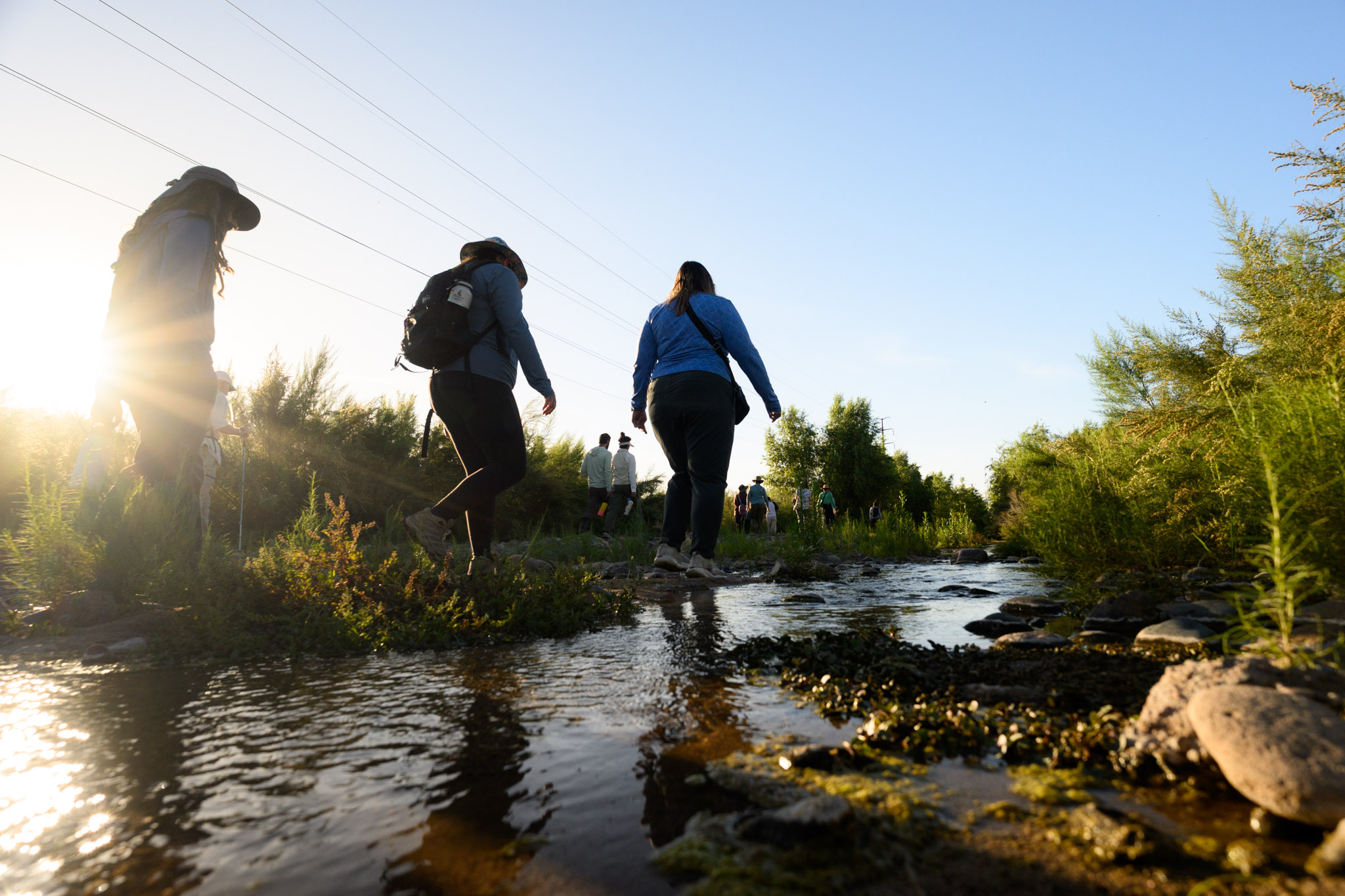
The Irvington Outfall is one of four outfalls in Tucson that release recycled water into the river to support surface flows, contribute to groundwater recharge, and enhance riparian habitat. For the outflow at Irvington, we are interested in identifying which tree, native plant, and invasive species have popped up and understanding why these species indicate healthy river ecosystems and/or threats to their continued health. Native riparian trees like Goodding’s willows and cottonwoods provide evidence of rising groundwater levels, while invasive species like tamarisk compete with native species for limited water resources.
During our survey, Watershed staff and RRN volunteers did a plant count to get an idea of what’s growing in this newly grown forest so that we could share the data with the public. The information we gathered will help Watershed and the community better understand the new forest and advocate for its protection and enhanced management by the City and County. The survey took place between Irvington and Ajo, with plans to return to the site later this summer and continue monitoring the willow forest. Results from the recent survey suggest that the outfall is helping this portion of the Santa Cruz recover from vegetation loss due to lack of surface flow; however, the overgrowth of competing species will certainly need to be monitored and managed.
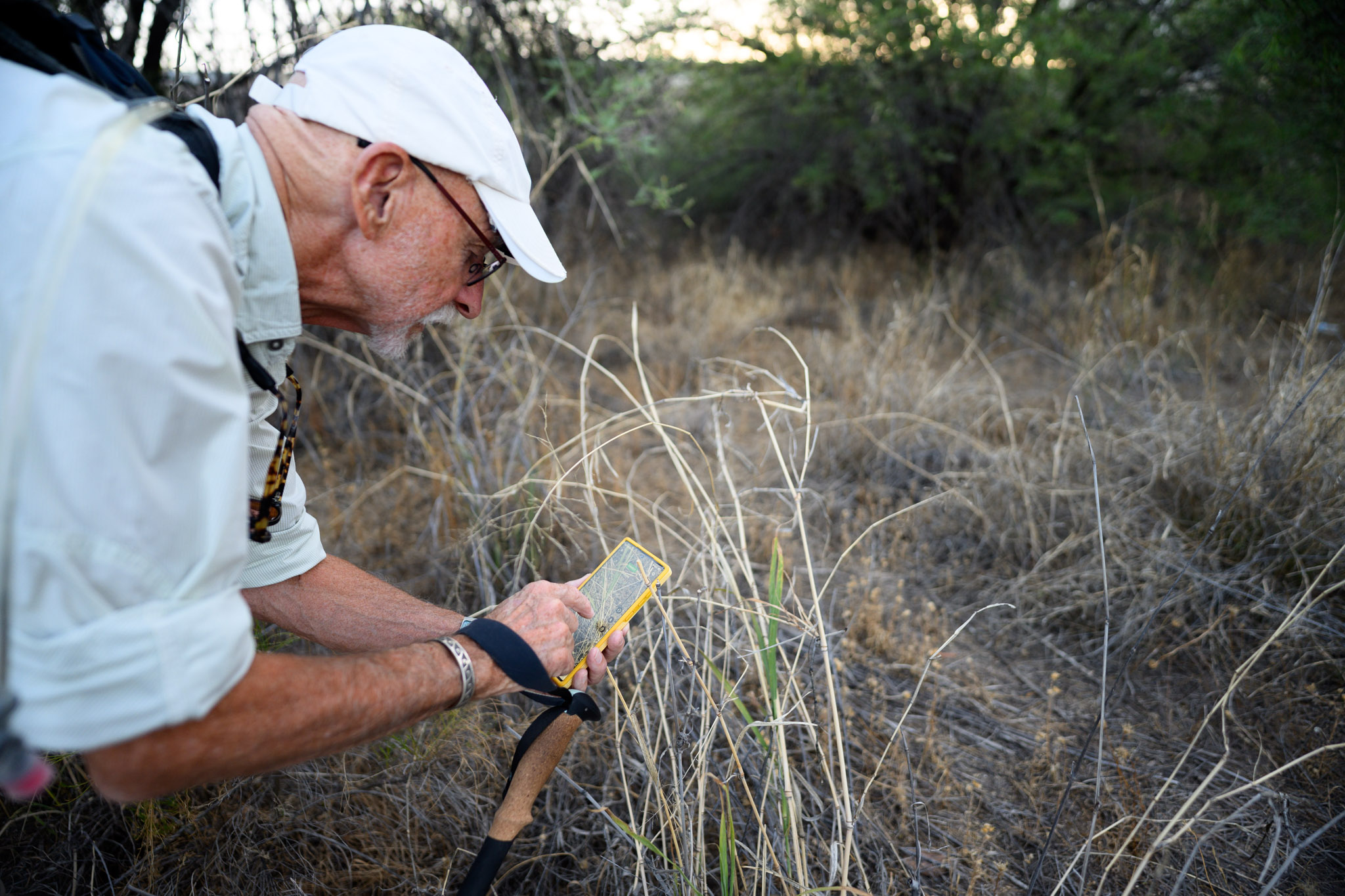
During our survey, Watershed staff and River Run Network volunteers conducted a “line sweep”: a hands-on, community science fieldwork method used to track environmental recovery. As a team, we stood side-by-side in a straight, spaced-out line to survey the riverbed. As the team walked forward together, we acted like a "human comb," looking for specific target species on our list, like native Goodding's willow, that have naturally sprouted thanks to rising groundwater and recycled water releases. When a surveyor spotted a plant, they would call out and let other surveyors know they’d logged it into ArcGIS Survey123, an accessible data collection app that uses geographic mapping. Every log created a data point for each plant that was counted so that we can analyze the data back at the Watershed Living Lab and get an idea of what is growing. This is an easy surveying approach for people to get involved with that ensures that large stretches of the riparian corridor are covered evenly without counting the same tree twice. By collecting precise plant count data, we are able to map out exactly how fast this new riparian habitat is springing to life.
Of the nearly 200 riparian trees we surveyed, the majority of the species we saw were Goodding’s Willow, an important species that contributes to erosion control and streambank stabilization, provides wildlife habitat, and creates shade that promotes cooler microclimates. Presence of this species indicates shallower groundwater levels, as their roots typically reach depths of no more than 7 feet. We also saw a good number of velvet mesquite and blue Palo Verde trees, two other species that provide shade, wildlife habitat, and food–both with edible seeds. Prior to intense groundwater pumping, the Santa Cruz River supported large populations of cottonwood and mesquite forests although what we’re seeing now is dominance of Goodding’s Willow trees that have taken advantage of the flow of recycled water.
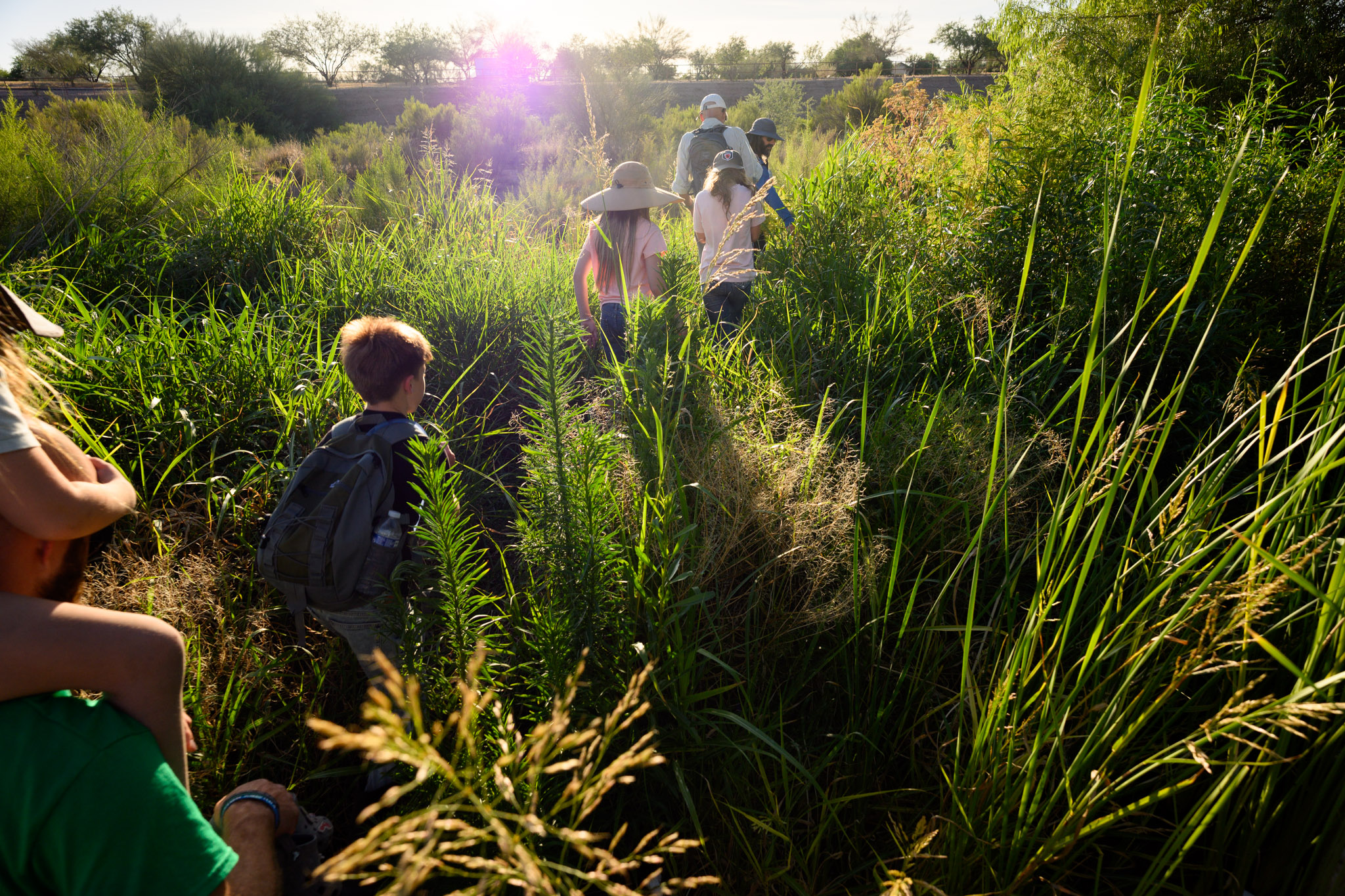
The most abundant native plants in this riparian forest were desert broom and burro brush. Desert broom and burro brush are both considered “pioneer plants,” which are efficient at colonizing newly-disturbed soil, so it was no surprise to see these two shrubs present in abundance within the newly growing forest. Other native species present during our plant count included cattail, saltbush, horseweed, sacred datura, switchgrass, vining milkweed and desert tobacco.
As far as invasive species go, we mostly saw buffelgrass, Bermuda grass, Johnson grass, salt cedar (or tamarisk), and Mexican Palo Verdes. Invasive grasses, originally introduced throughout the Southwest as livestock forage, outcompete native grass and plant species by taking up too much water, sunlight, and space and also increase wildfire risk by creating highly flammable fuel supply. Salt cedar (tamarisk), introduced for erosion control and as windbreaks, is a high-water-use species that can spread quickly. Although it provides habitat for the Southwestern Willow Flycatcher, this species contributes few other benefits to additional native species and outcompetes native seedlings, increases wildfire risk, and increases soil salinity.
The growth of a willow forest by the Irvington outfall indicates recovery on the Santa Cruz, but especially in light of the many invasive species that compete with native species for resources, how this forest is managed will be important for its continued health and sustained growth in the future. After reflecting on our experience being out on the river, we were left with several questions.
- How will the willow forest respond to recent water shut-offs? Water was shut off at the Irvington outfall for 6 weeks at the beginning of June for maintenance purposes.
- How is potential per- and polyfluoroalkyl substances (PFAS) contamination from the TARP-treated groundwater that is being released at the Irvington outfall influencing the growth of riparian species and to what extent are PFAS being spread across the Tucson watershed? Legacy contamination from the Tucson Airport and local industry has created a groundwater plume containing both trichloroethylene (TCE) and PFAS that travels northwest from TARP.
- How have the species present in the river changed since channelization of the river and over-pumping of groundwater? Are there species missing that were historically common in the river?
- And lastly, how would potential Colorado River allocation cuts affect the amount of water that is released into the river in the future?
If you are curious about these questions too, or if you are interested in an opportunity to get out on the river and learn more about riparian species thriving in the Santa Cruz, the River Run Network will be hosting another willow forest survey on July 30th.