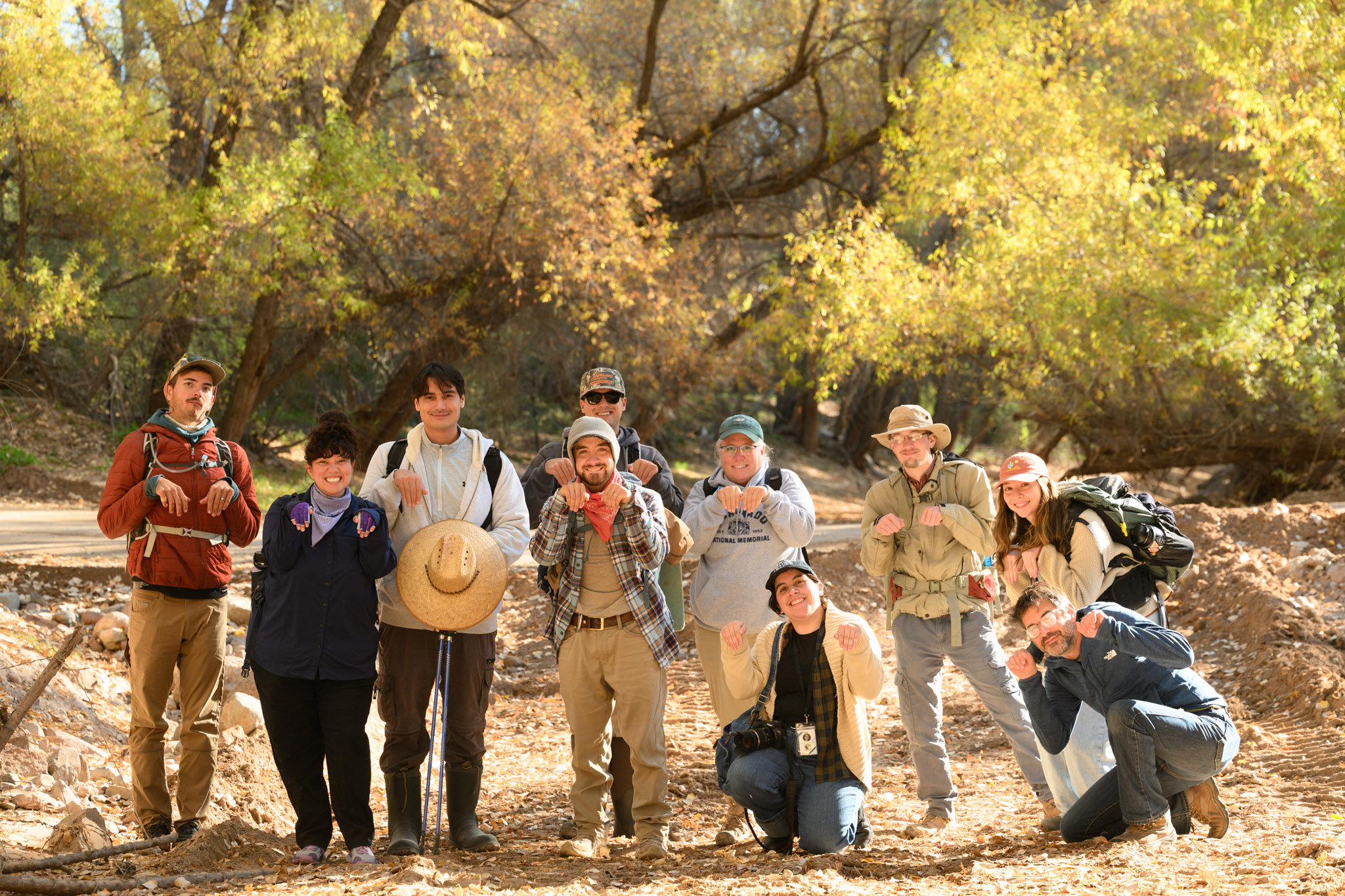
On December 6th, beneath a canopy of cottonwoods turning gold and amber, our survey team stepped carefully through the muddy banks of the lower San Pedro River near San Manuel, Arizona.
As Watershed Management Group’s (WMG) Restoration Ecology Coordinator, this was my first year coordinating our Annual Bi-National Beaver Survey on the San Pedro River. It was my second time leading a beaver survey group for our Arizona San Pedro survey, and this group was an incredible mix of people: staff from partner organizations like Borderlands Restoration Network, collaborators from the Arizona Beaver Working Group, a couple of journalists, and WMG’s trusted photographer. Alongside me was my hand-selected co-lead, Brick Cummins, who has volunteered on three of the five annual surveys we have conducted.
In many ways, this survey especially felt full circle.
Brick had actually been the survey lead during my very first beaver survey in Spring 2024, when I volunteered as an undergraduate student at the University of Arizona with my best friend. That trip introduced me not only to the San Pedro River, but to the story of beavers in the Southwest, a story of loss and potential recovery. I learned that beavers were once abundant throughout the watershed before being heavily trapped during the fur trade of the 1800s. I also learned that the beavers we were helping survey were descendants of a population reintroduced in 1999 into the San Pedro Riparian National Conservation Area by the Arizona Game and Fish Department and the Bureau of Land Management.
Now, a year and a half later, I was coordinating the survey effort.
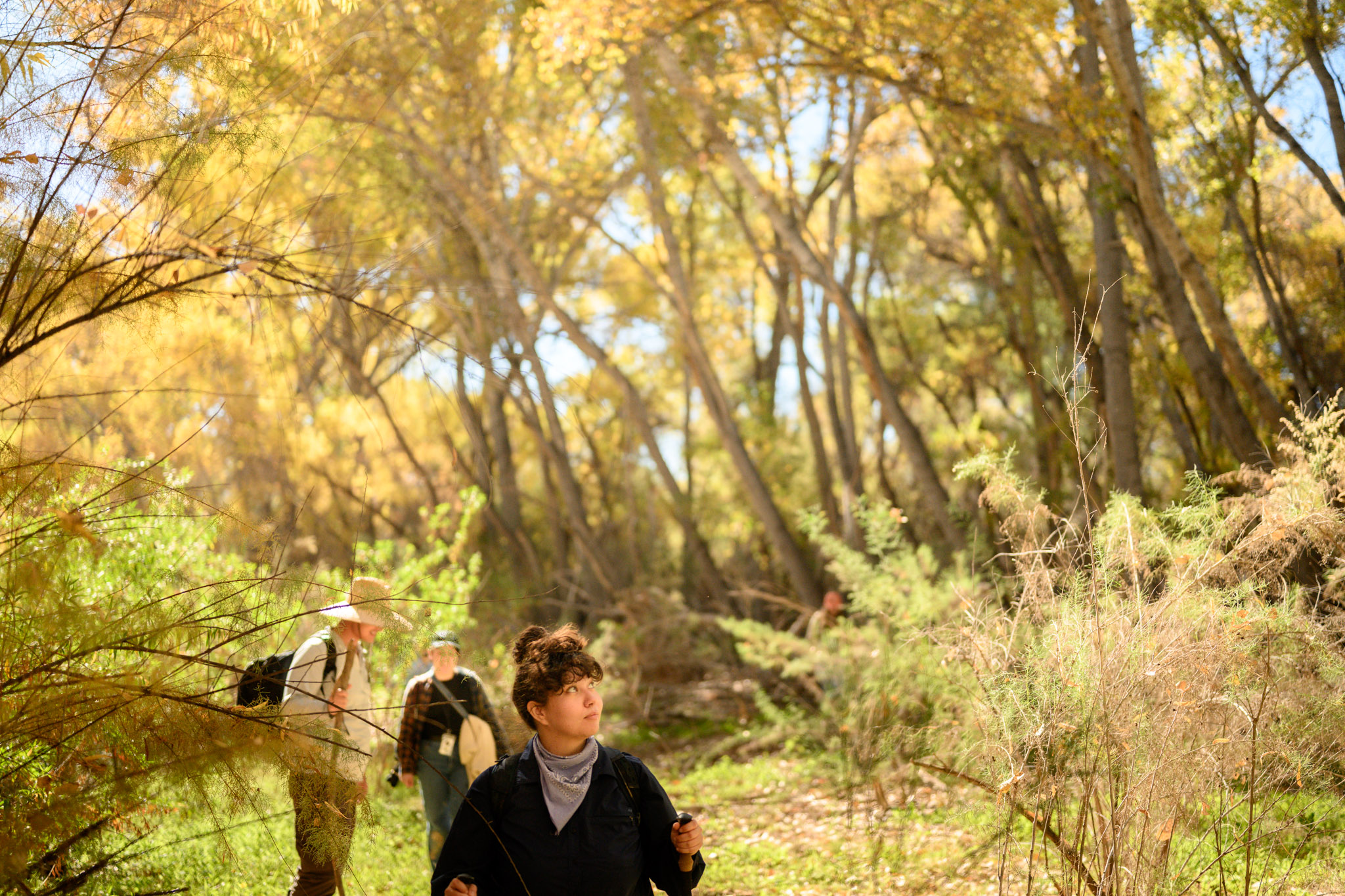
Most imagine southern Arizona as a desert of saguaros and dry washes, but down in a river corridor, the landscape transforms. Cottonwoods and willows shade pools of water and birds sing through the riparian canopy. Mud clings stubbornly to your shoes. Many of us slipped at least once while navigating the slick banks and shallow, shin-deep water.
As we bushwhacked through dense vegetation and crossed stretches of river channel, the landscape quietly revealed its history. Steep banks hinted at how much broader and more connected the river once was before decades of erosion and decreased water flow reshaped the system.
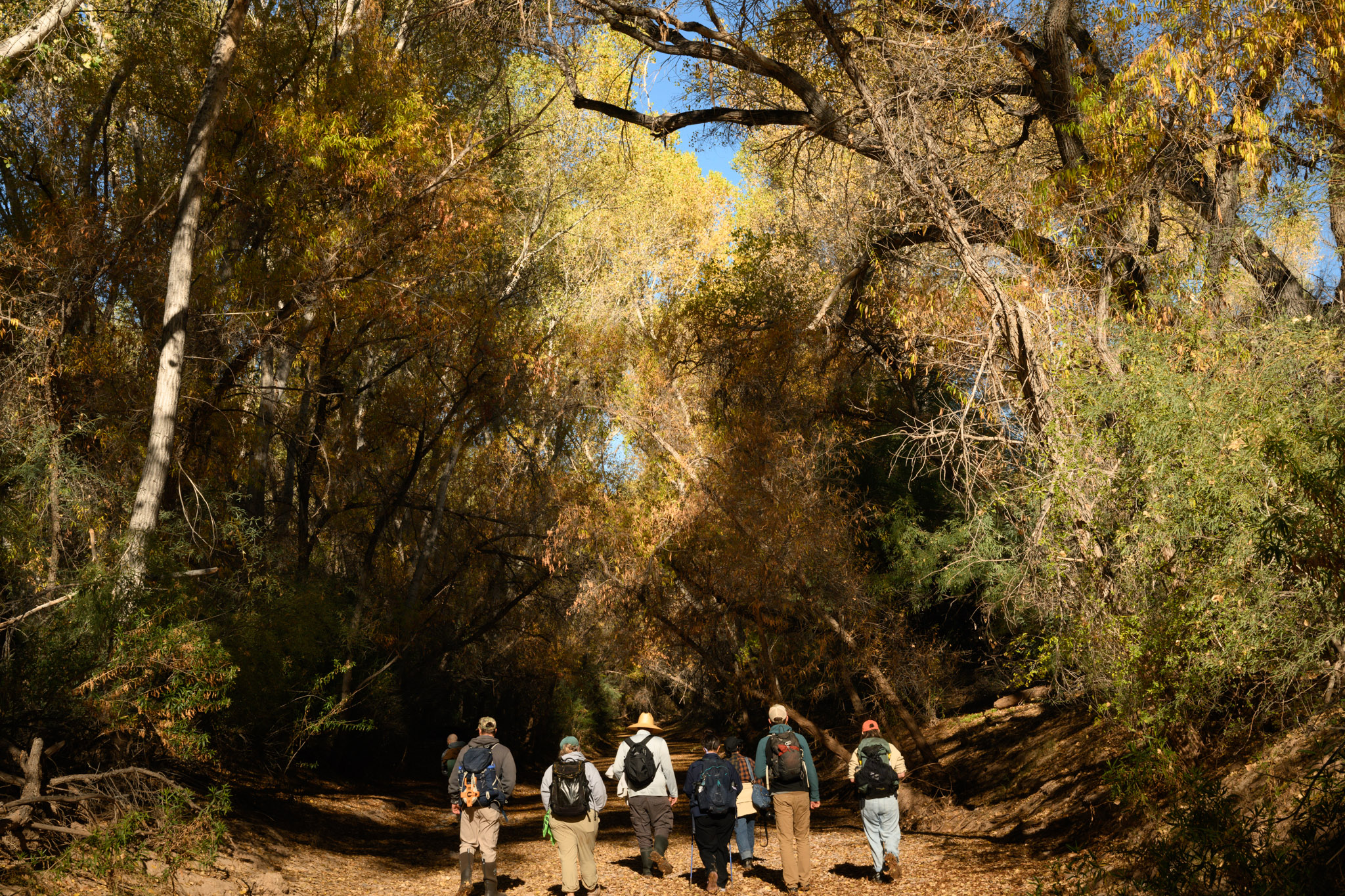
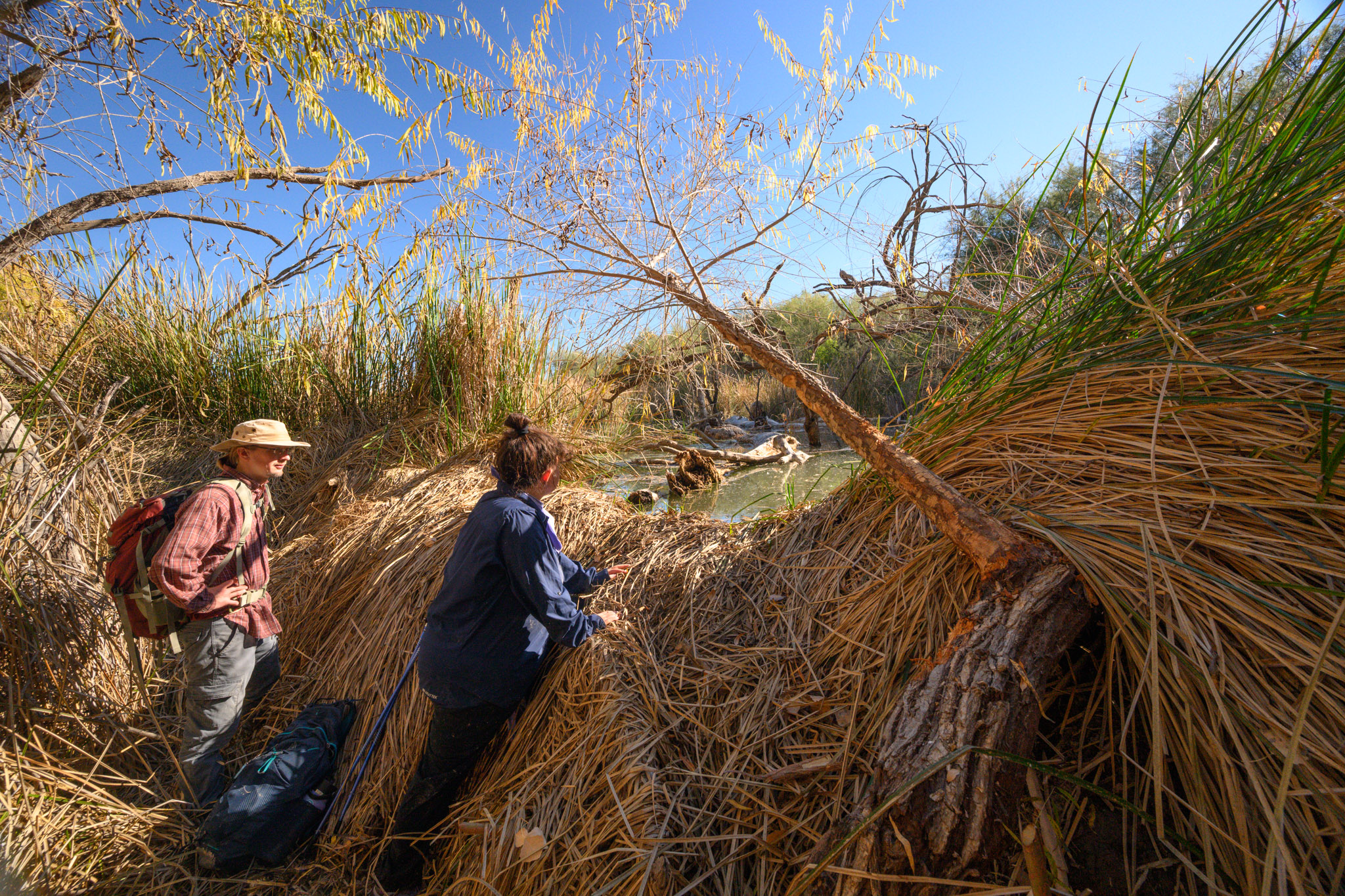
Throughout the day, we moved with focused excitement, scanning for signs of recent beaver activity: freshly chewed trees, slides pressed into muddy banks, tracks, scent mounds, lodges, dams, and food caches. We also collected wood chip samples for Cochise College’s beaver genetics study, each sample helping piece together a clearer picture of the river’s remaining beaver population.
Then came the moment I had not expected.
Brick was ahead of the pack when I suddenly heard him quietly exclaim,
“Beaver! And I’m not kidding!”
At first, Brick’s announcement sounded like a dream, like a wish coming true.
An actual beaver sighting during a survey has not happened before. Most of our work revolves around interpreting the traces they leave behind rather than seeing the actual beavers themselves. But the urgency in Brick’s voice sent us scrambling forward.
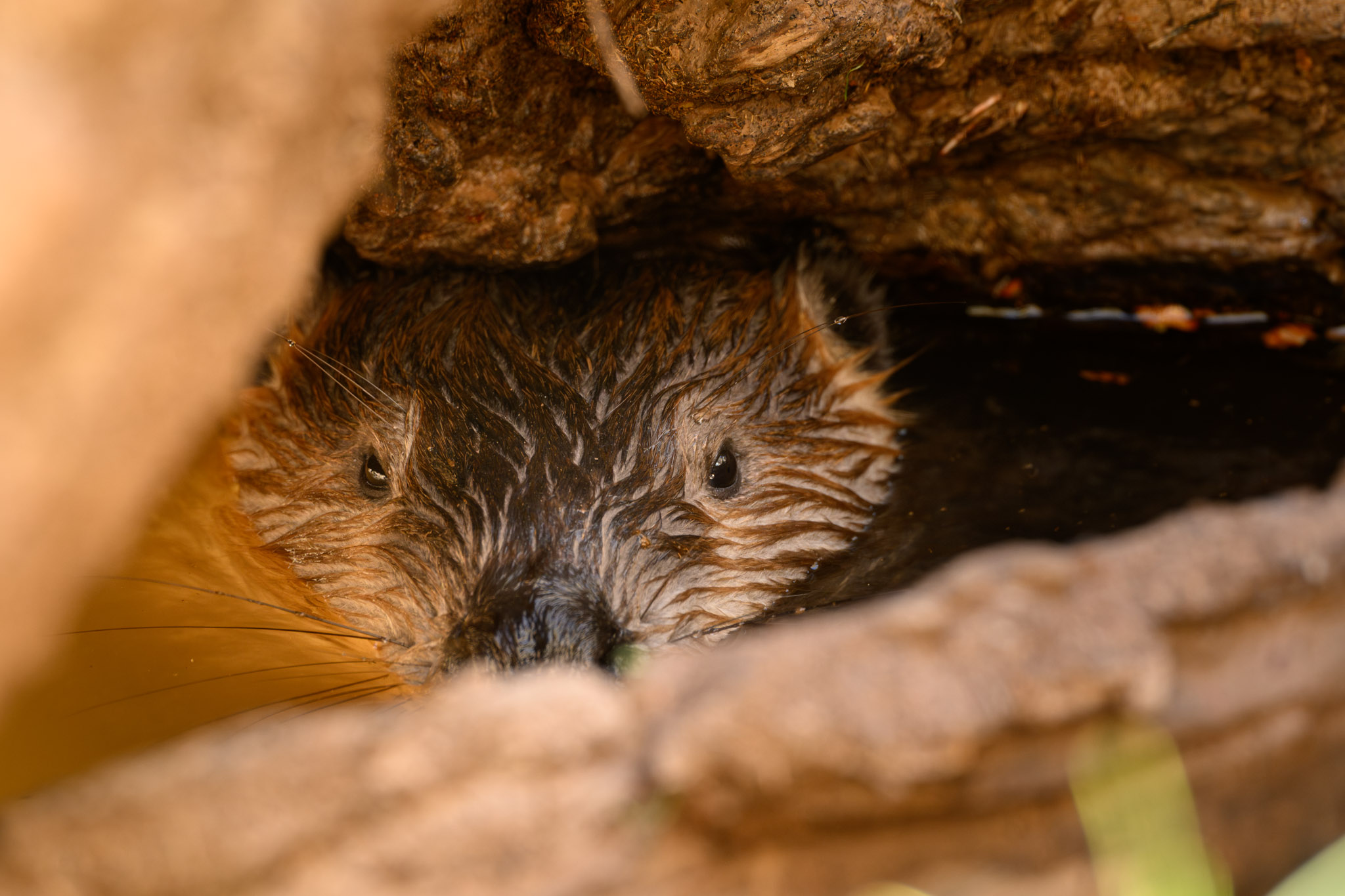
There, in a moderate to deep pool, was a beaver.
A real, living beaver. In the river.
For a moment, none of it felt real. After multiple surveys of only seeing signs such as dams, lodges and chew marks, suddenly a beaver was right in front of me.
I remember feeling stunned by how calm and at home it looked. My first instinct was to pull out my phone and record a video, partly because I needed proof that this had actually happened. That beaver sighting video can be seen on our YouTube page here.
This marked the first confirmed sighting of a beaver during a WMG-coordinated survey.
And honestly, it felt magical.
The beaver disappeared beneath the surface and resurfaced again under a log jam. My survey group crowded quietly along the bank, careful not to scare it away. The excitement was immediate and electric. Everyone fell into a whisper and then watched in silence.
I don’t even know how long we had stood there in wonder, observing the beaver while our photographer, Julius, took photos. It felt like a full-circle moment to have a professional photographer and journalists with us to capture it—people might not have believed it otherwise.
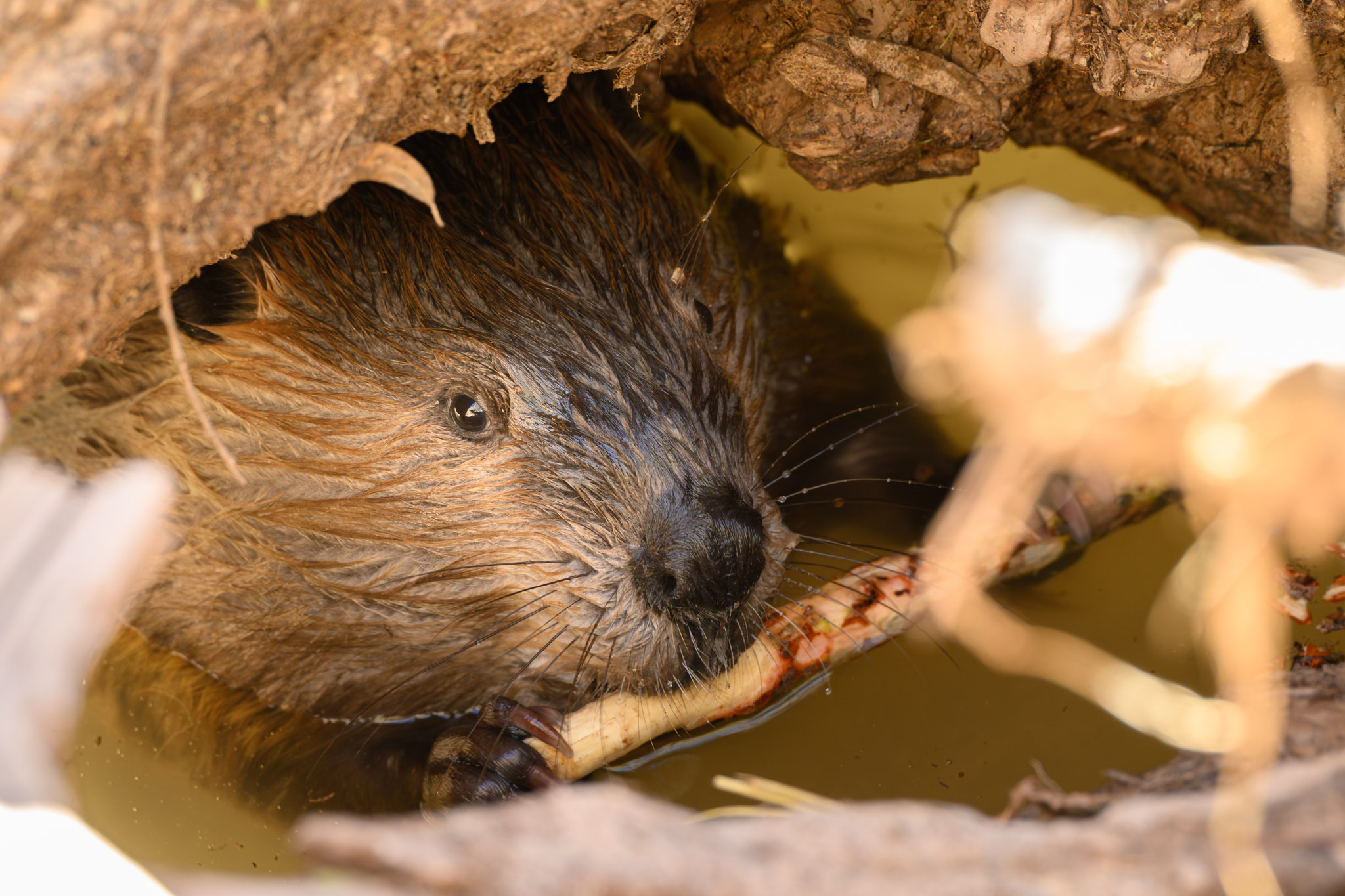
This single moment served as a reminder of why this work matters. Beavers are more than just cute and charismatic species, they are ecosystem engineers capable of transforming riverscapes. Their dams slow water, reconnect floodplains, reduce erosion, and create critical habitat for countless other species. In arid regions like the Southwest, their ability to hold water on the landscape becomes even more important.
What We Found During the 2025 Survey
Fall 2025, was our fifth and most recent beaver survey along the San Pedro River. Around 120 volunteers helped survey approximately 63.5 river miles and tributaries, spanning from the river’s headwaters in Sonora, Mexico, to the lower San Pedro downstream of Mammoth, Arizona.
This also marked the second year surveying reaches in the lower San Pedro River. Unlike in 2024, however, we did not survey the middle San Pedro reaches this year due to a lack of flowing water and reports from landowners indicating no recent beaver activity.
Based on survey responses and observed evidence, we estimate there are currently approximately 33–46 beavers along the San Pedro River system.
Of those:
- Approximately 12–16 beavers, including three family groups, were documented in Sonora.
- Approximately 21–30 beavers, including 3–4 family groups, were documented in Arizona.
- In Arizona: the San Pedro Riparian National Conservation Area (SPRNCA) contained an estimated 11–15 beavers and the lower San Pedro supported an estimated 10–15 beavers across 2–3 family groups.
Compared to Fall 2024, the 2025 survey suggests a slight increase in the overall beaver population, rising from an estimated 30–38 individuals to 33–46.
Still, these numbers remain far below historical levels.
Some of the recent increase in the lower San Pedro can be linked to the Arizona Game and Fish Department’s relocation of a male and female beaver pair from the Arlington Wildlife Area along the Gila River into the Lower San Pedro River Wildlife Area. These beavers were relocated after being considered nuisances in their previous location and may now contribute positively to riparian restoration efforts in the lower watershed.
Elsewhere, increased detections may reflect behavioral changes rather than dramatic population growth. During drought conditions, beavers may expand their foraging areas in search of resources, making signs of activity easier to detect across wider areas. Increased juvenile dispersal may also contribute to more sightings of solitary individuals moving through the watershed.
At the same time, long-term pressures remain significant. Previous survey partners have pointed to drought, increasingly variable monsoon seasons, fluctuating river flows, and predation by species such as mountain lions as potential factors influencing population decline.
Despite the uncertainty, one thing remains clear: beavers continue to persist on the San Pedro River, and their presence continues to matter.
Becoming the Beaver
At Watershed Management Group, surveying beavers is only one piece of our work.
Across the watershed, we are also working to “Be the Beaver” ourselves through low-tech process-based restoration projects designed to mimic the natural functions beavers provide.
Along the Babocomari River, a tributary of the San Pedro, WMG has been partnering with private landowners to install Beaver Dam Analogs, or BDAs. Built from wooden posts, branches, mud, and other natural materials, BDAs imitate the structure and function of natural beaver dams by slowing water flow, trapping sediment, reconnecting floodplains, and restoring riparian habitat.
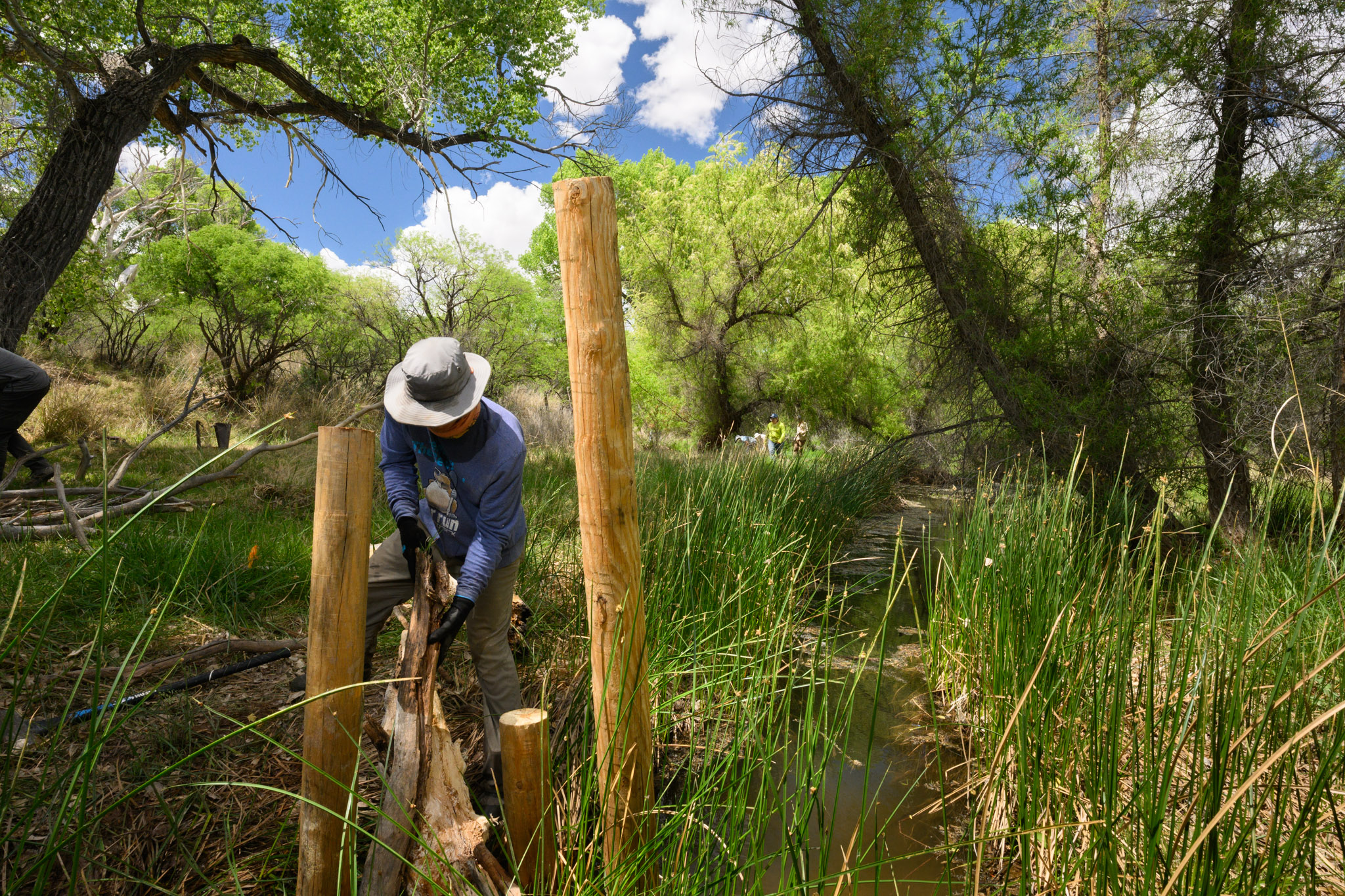
In 2025 alone, WMG helped install 17 BDAs along the Babocomari River.
And the beavers noticed.
Just upstream of several restoration sites, beavers have already added five dams of their own.
That response gives us hope.
It suggests that when we help restore the conditions rivers need, slowing water down, rebuilding habitat, and reconnecting floodplains, beavers may return and continue the restoration work themselves.
We are also interested in partnering with additional landowners along the San Pedro River and its tributaries to implement similar restoration projects throughout the watershed.
Because ultimately, conservation is about far more than one species. It is about restoring resilience to desert rivers in an increasingly dry future.
And sometimes, if you are lucky enough, that work rewards you with the sight of a beaver on the surface of an unassuming pool of water on a December afternoon.
Join the Effort
If you are interested in supporting our understanding of beavers along the San Pedro River and contributing to restoration efforts across the watershed, consider joining WMG’s River Run Network.
Together, we can continue building healthier rivers, one dam at a time!