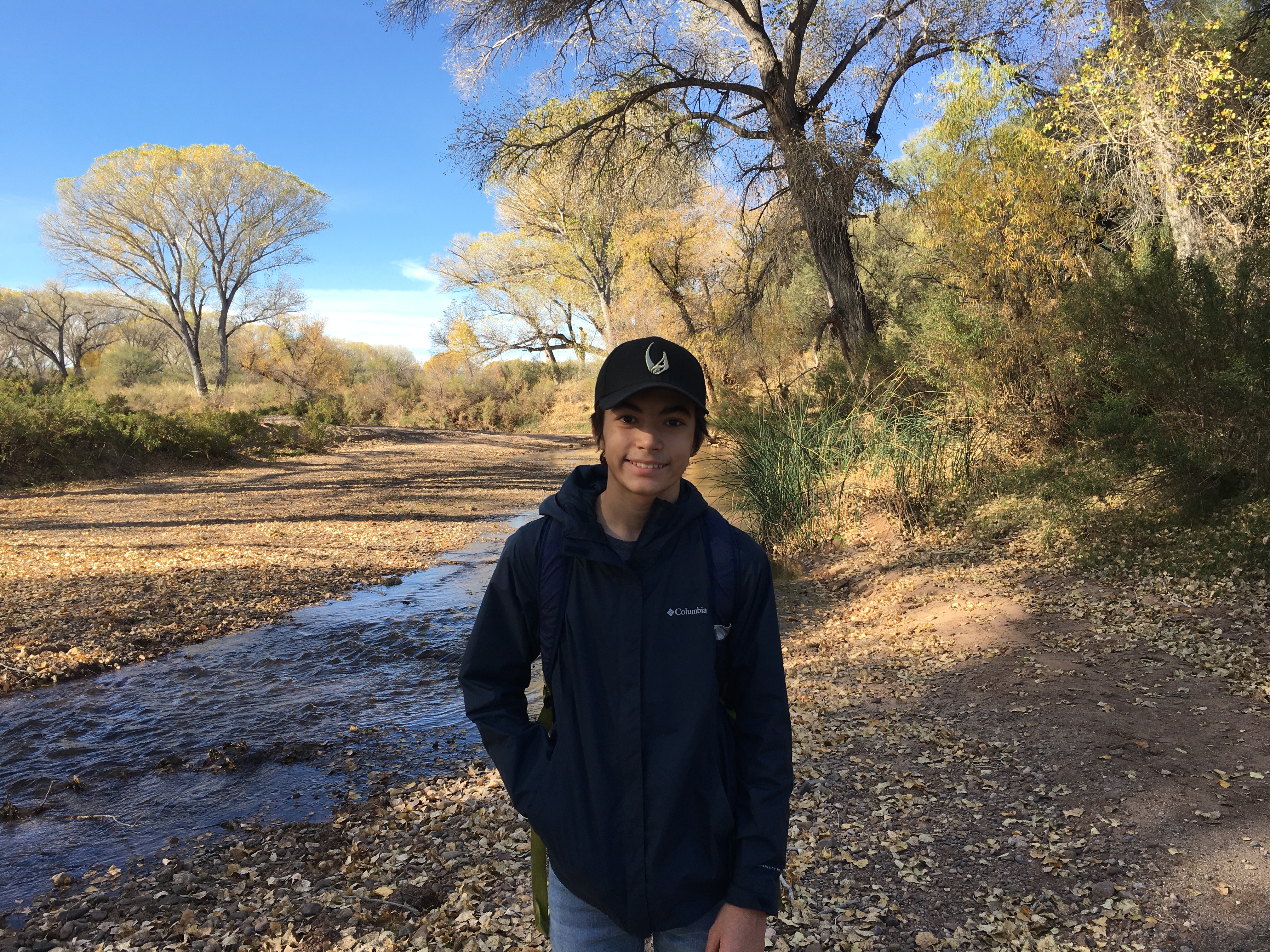
Getting a 7th grader to do anything is a virtually impossible task. This is especially so when the thing in question is wading through ice cold water on a cold winter morning while searching for the smallest sign of a beaver. But still, my mom managed to get me, then a 13 year old, to join her on WMG’s beaver survey in the depths of COVID.
We trekked along the wild San Pedro, through grassy meander scars and past cottonwoods as wide as cars, with my mom and me the only volunteers besides the survey lead himself. As we rounded a bend of the river, the water seemed to come to a halt. It spread across the channel and sat still, as smooth as glass. I began the survey without expectations of a major discovery, but we had practically stumbled right onto one: a massive, well-maintained beaver dam stretched across the river before my very eyes. From this point on, I was absolutely hooked.
While I am now an intern at WMG, my first years at the organization were on the beaver survey as a volunteer. I got a thrill going out into the San Pedro River with my family, as if I were on a treasure hunt for signs of beaver. But despite my enthusiasm, I was too nervous to lead a survey group myself. My survey leads throughout the years had all seemed so experienced, and I was sure I could never get on their level. Who would ever follow my instructions? Could I even handle managing a bunch of volunteers?
These were the questions swirling through my mind as I prepared to lead three surveys last year. I was worried that the responsibility of leading would turn the survey into a disaster. I could not have been more wrong.
Participating in the beaver survey was already an amazing experience, and this was magnified even further by being a lead. Every survey was a new chance to meet people from countless backgrounds who all shared a passion for helping Southern Arizona’s precious watersheds. From school teachers to accountants to retired scientists visiting from Montana, everyone who volunteered with me provided me with an opportunity to learn. My fellow volunteers taught me about countless other fascinating parts of the Southwestern outdoors, from how to identify different species of hawks to the tastiest best wild plants. These interactions were super rewarding, and I felt more connected to the Tucson community than I ever had before.
I had had similar experiences with my fellow volunteers in the past, but now, they could learn from me as well. My years of experience surveying had granted me some knowledge about beavers, knowledge I shared at any opportunity. I was also able to get more involved in the actual beaver research itself, since as a lead I had to ensure that all signs of beaver were recorded correctly. I scrambled up crumbly banks and forded through waist-deep water to help my volunteers differentiate between beaver chews and natural wear on the lush cottonwoods that line the river.
After how wonderful my first year of leading the survey was, I couldn’t wait for this year’s round of. Now that the beaver surveying season is over, I can definitely say it was just as great as previous years. On my first survey of the year, I led six volunteers on a stretch all on my own. Though I was initially unsure of my own abilities, everything went well. No matter how many (or how few) signs of beaver I come across, the experience of being out in nature with other members of my watershed community is a reward in itself. I am sadly not going to be a WMG intern forever, but I know that for years to come the beaver survey will hold a special place in my heart.
If you are interested in joining this effort, supporting our understanding of beavers along the San Pedro, join the River Run Network!