On a rather warm mid-April morning, a group of apprentices, interns, field technicians, docents, and staff, resplendent in sun shirts, long pants, buffs, and hats, posed for a “before” picture in front of one of the rain gardens at the Living Lab. Already smiling, we were about to embark on one of the most enjoyable and rewarding work days of the season.
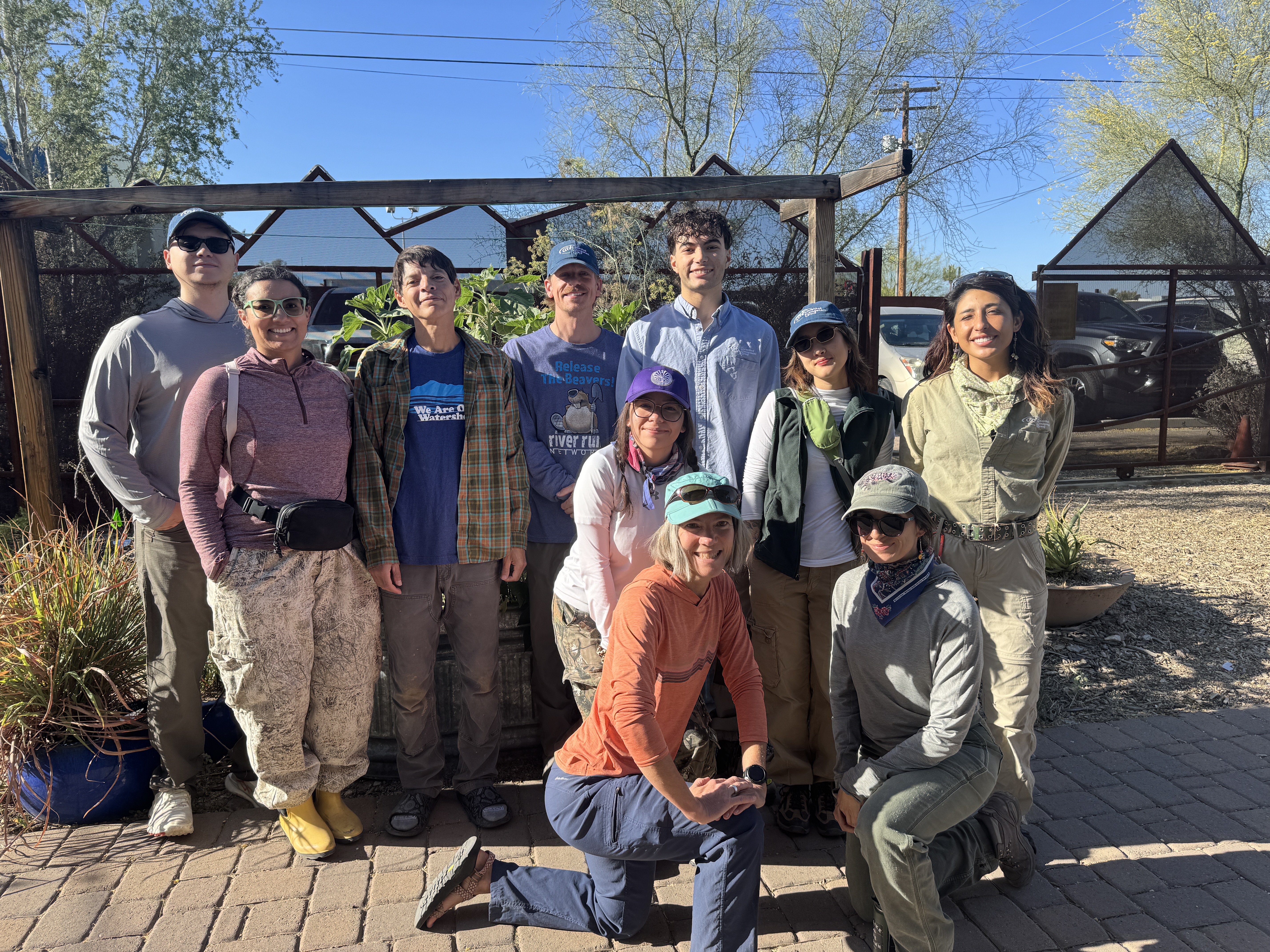
Soon, our 2025-2026 apprentice, intern, docent, and field technician cohort, alongside other staff, headed off to the Babocomari River, where we spent the day learning about and helping to implement river restoration strategies. Many of our interns, apprentices, and docents had trained together through a series of hands-on workshops during Fall 2025, and this was to be the cohort’s final field outing before several of them moved on to new professional opportunities.
Once at the Babo, surrounded by towering cottonwoods, verdant native grasses, melodious bird calls, and flowing water, we gathered logs, sticks, rocks, grasses, and mud to add to beaver dam analogs (BDAs) and post-assisted log structures (PALs). These structures had already been partly constructed, thanks to the hard work of both volunteers and our trip leaders: Desert Rivers Restoration Manager Jace Lankow, Apprentice Lizbeth Perez, and Field Technicians Alfredo Vasquez and Lauren Renteria.
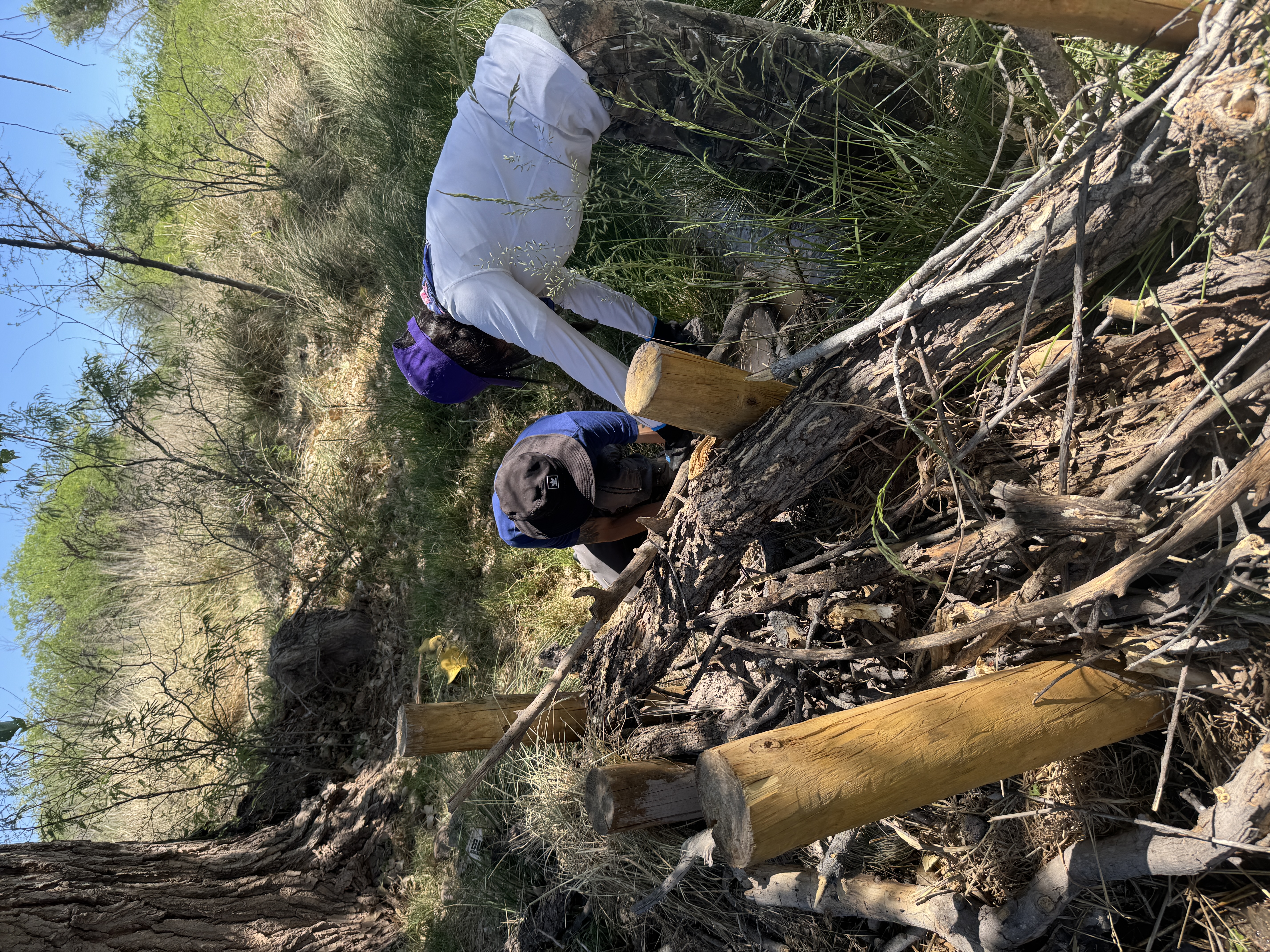
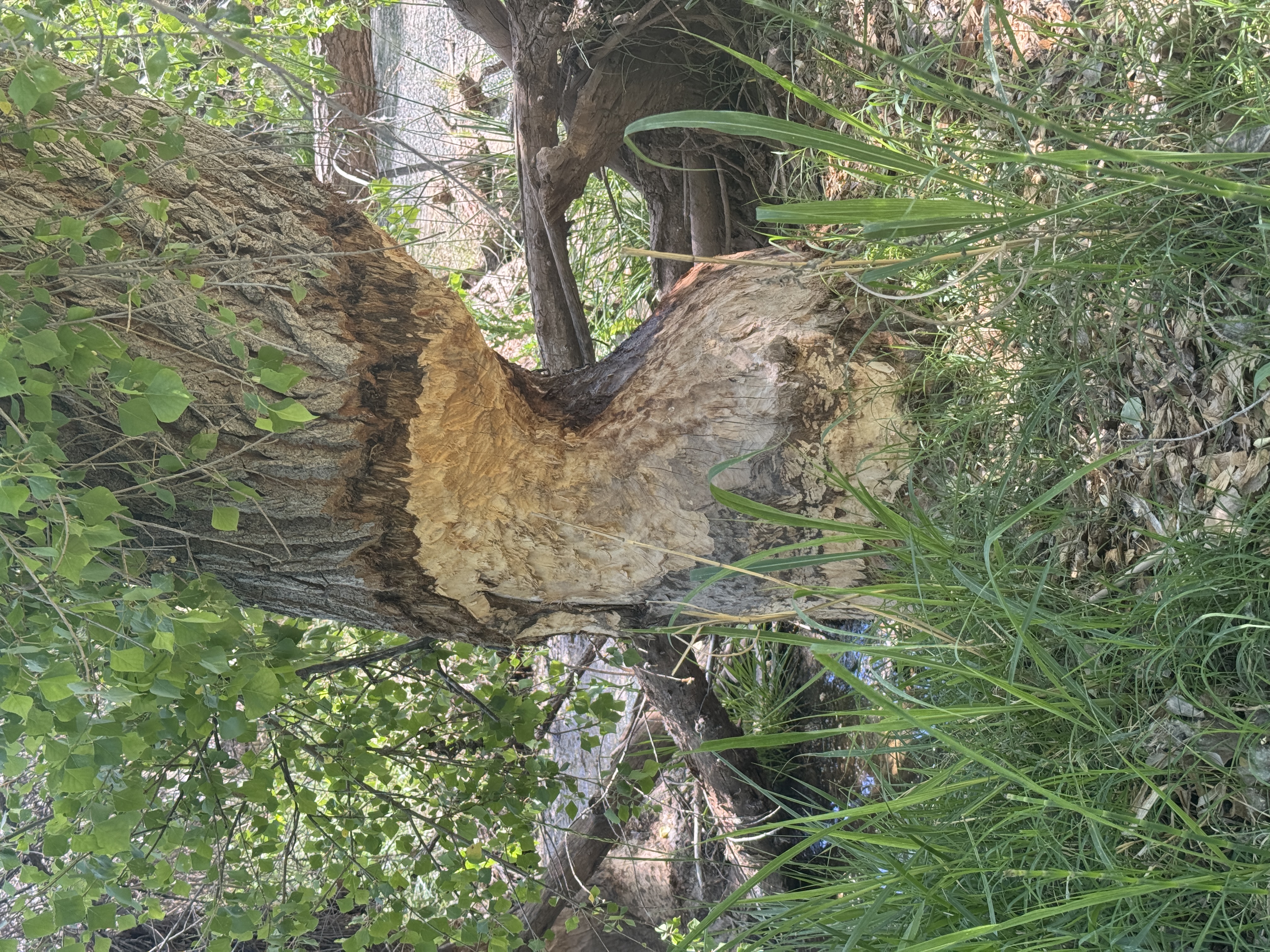
Partnerships with local landowners interested in stewarding this special landscape had enabled the restoration team to make several visits to the Babo earlier in the spring. Our goal on April 18 was to add to their previous work, which mimicked that of beavers in helping to slow, spread, and sink river flows. Although we didn’t see any live beavers that day, we did see evidence of recent beaver activity and were thrilled to know that “nature’s engineers” had also been hard at work restoring the area.
Our group of humans’ physical work was an important part of the day, but equally important was spending time together in a beautiful riparian area and taking the time to observe our surroundings.
I asked our cohort members to share their reflections on their outing to the Babo, and here’s what they had to say:
Alfredo Vasquez, Field Technician: It was memorable to see everyone connect with nature through land stewardship.
Micaila DeClouette, Docent: My biggest takeaway from the Babocomari workshop was how much nuance went into the PALS & BDA; the strategy is not just to put up a dam to stop or spread water, but to anticipate the components breaking down and eventually flowing downstream. I also really valued how the team took a fluid approach to the construction (For example, wobbly posts to make it easier to fill with branches and anticipating future meanderings of the water…).
Issa Mena-Garcia, Apprentice: The most memorable moment for me was when the group was exploring the uplands of the river. Just a little further up from where we had observed some beaver activity, there was a pool of water about ankle-deep, with probably hundreds of spiders jumping through the plants. I noticed there was a spider with dozens of slings on its back – and it got me thinking of how much life there is in the Babo, both big and small.
Henry Schon, Intern: What really stood out to me the most was just how much more vibrant the Babo was in comparison to the creeks and rivers here in Tucson, even in places with frequent flow. The river obviously has been damaged somewhat by overgrazing, but it was cool to see what a Southwestern river really could look like with ample flow and space to meander around. Thanks again for the great opportunity to go out there!
Jace Lankow, Project Manager: It was special seeing the excitement in the eyes of those who had never been to the project site before. The lush cooling corridor of cottonwood and willow gallery forest that lines the perennially-flowing stream is truly an oasis from the scorching heat of the surrounding uplands, and it took witnessing that authentic appreciative reaction from others to remind me of the affection that I felt during my very first visit to the Babocomari River over 6 years ago.
In our “after” photo from the Babo, the smiles are even bigger than they had been in the shot of us pre-departure at the Living Lab. Before we parted ways that afternoon, we circled up, shared some highlights from our experience, and brought it in for a group cheer of “Meander!”, voicing our commitment to encouraging the Babocomari and other rivers to return to their natural state of winding, slower flows through the landscape.
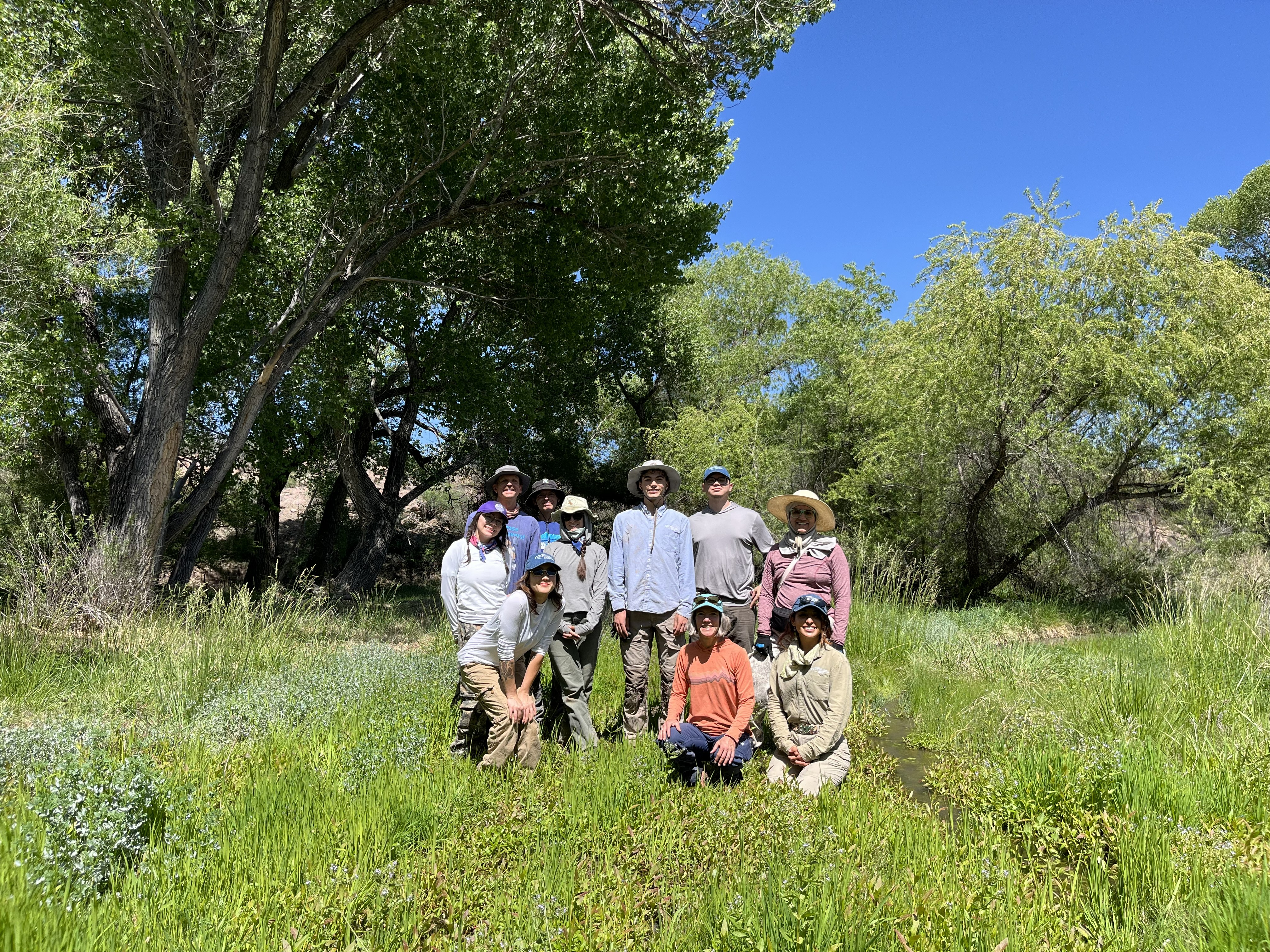
Saying farewell to our 2025-2026 cohort of apprentices, interns, and field technicians will be bittersweet for me and for all of the staff who’ve had the pleasure of working with this dynamic group of environmental stewards. As they move on in their professional lives, we look forward to hearing of their adventures (or should we say meanderings?) and successes. We thank them for all that they have given to Watershed and wish them the very best!