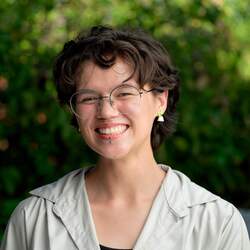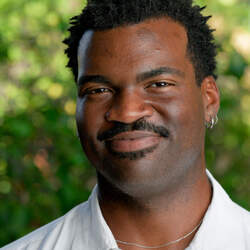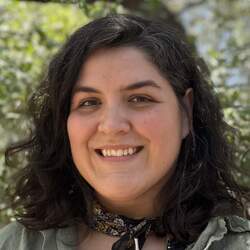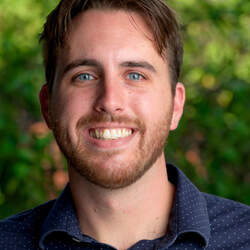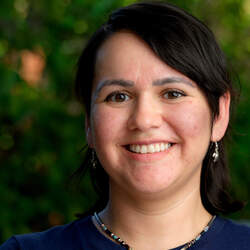
Watershed Management Group Intern

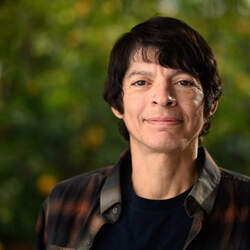
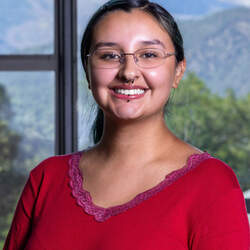
Anissa McKenna
Urban River Restoration Apprentice

Anissa McKenna is a member of the Pascua Yaqui Tribe and was born in Tucson, Arizona. She earned a M.S. in Environmental Science from the University of Arizona where she studied the bioaccessibility of arsenic in relation to contamination from uncapped mine tailings. Anissa has experience in climate resilience, tribal engagement, interagency collaboration, and community organizing, and is passionate about protecting the land and community. Her family has strong ties to the Santa Cruz River and many family members remember swimming and playing in the river and washes as children. She enjoys reading, playing music, and gardening.

Language fluency: English
Pronouns: she/her

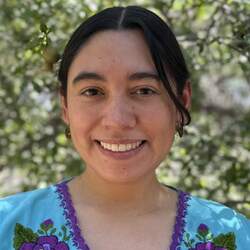
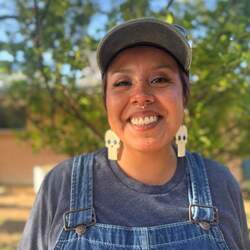
Carmina Diamente
Community Engagement and River Restoration Apprentice

Drawn to the natural world and the man-made impact on it from a young age, Carmina found her passion in environmentalism and later, social justice. She went on to the University of Arizona to obtain a B.S. in Environmental Science. During her education, she completed projects and independent studies related to adaptation strategies and environmental justice movements. Carmina is driven to learn more about and contribute to restoration efforts particularly in her Sonoran desert childhood home. In her spare time, she pursues learning French and the electric bass, while trying out new baking recipes, attending the occasional boxing or yoga class, and being an avid movie-theater-goer. 

Language fluency: English
Pronouns: She/They

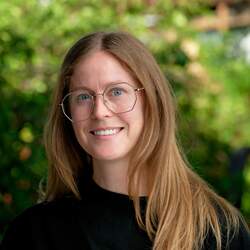
Esther Wroth
Community Conservation Apprentice

Esther grew up in Tianjin, China, her maternal hometown. Her background includes work as the Marketing Coordinator at the San Xavier Co-Op Farm and a Bachelor's degree in Science, Technology & International Affairs from Georgetown University with minors in Russian and Theology and a concentration on Energy & Environment. Her research on climate resilience in Sāmoa shaped her understanding of sustainability as a reciprocal relationship where people and nature provide for each other. Esther is interested in anti-capitalist community food sovereignty, global Indigenous self-determination, and spirituality's role in our relationship to land. She loves bugs and her family, and she believes they all love her back.

Language fluency: English, Mandarin Chinese
Pronouns: she/her

Henry Schon
Restoration and Outreach Intern

Henry is a high schooler at BASIS Tucson North. Having lived in Tucson since he was a baby, Henry grew up in and around the watersheds of Southern Arizona, and developed a serious appreciation for them when he began to volunteer with WMG as a 12 year old. He is an avid hiker, and can likely be found wandering the trails of the Santa Catalina Mountains in the cooler months of the year. As an intern, Henry hopes to engage the Tucson community with the Arundo removal initiative and spread awareness about the value of our creeks and rivers.

Language fluency: English
Pronouns: He/Him

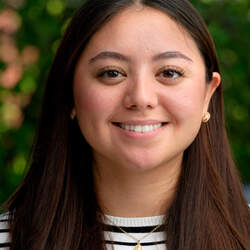
Issa Mena-Garcia
Non-Profit & Community Engagement Apprentice

I was born in Sonora, Mexico and am a member of the Tohono O'odham Nation. Growing up in Tucson next to Santa Cruz River I developed a deep love and appreciation for the Sonoran Desert. It is my goal to help bring my community together with the common goal to conserve water and restore our ecosystem. In my free time I enjoy spending time with my 3 dogs, Puppy, Chulo, & Boots, working in my garden and cooking. 

Language fluency: English, Español
Pronouns: She/Her/Ella

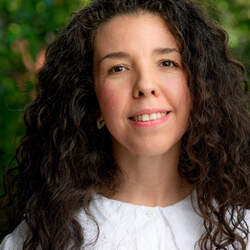
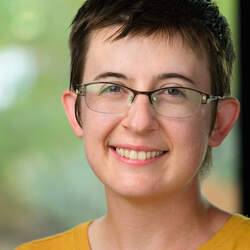
Jennifer Skinner
Urban River Restoration Apprentice

I’m a Chicana environmental educator and cultural worker from Douglas, AZ. My great love for my desert homeland, its people, plants, animals, food, rivers, and rich cultural heritage inspired me to pursue a B.A. in Environmental Studies with a minor in Mexican-American Studies from the University of Arizona. My education underscored the vital importance of cultural work as a tool for community healing and deepening our connection to the unique environmental conditions of the U.S.-Mexico borderlands. As an environmental educator, I have worked to design culturally relevant curriculum for Title 1 K-12 students in Douglas and Tucson, encouraging youth to connect with themselves and their heritage by working directly with the land, studying local history, and reflecting through eco-conscious artistic practice. In my personal time, I am a photographer, graphic designer, gardener, and community organizer who loves to explore the world, cook, and share meals with friends and family.

Language fluency: English, Español
Pronouns: she/they

Liam Donohue
Community Conservation Apprentice

Though he is originally from Virginia, Liam spent a large part of his childhood in Santa Cruz County, Arizona and Ambos Nogales, where he developed a love for the Sonoran Desert. He graduated with a bachelor’s in Environmental Sciences and Anthropology from the University of Virginia, with a focus on water resilience and water rights. Liam is interested in finding ways to promote human thriving within natural ecosystems, with most of his research focusing on watershed health and water access. He also holds a Master's in Teaching from UVa and brings  six years of experience in education. Within the Community Conservation program, Liam works in Green Stormwater Infrastructure (GSI) projects across Tucson and Southern Arizona. His favorite Tucson activities are watching storms during monsoon season and looking for quail. 

Language fluency: English, Español, Portuguese
Pronouns: he/him

Lizbeth Perez
River Restoration Apprentice

Having lived in every type of desert in the U.S., the Sonoran Desert was the one to capture Lizbeth's heart. Spending time enjoying and teaching others to enjoy the Sonoran Desert has been a passion of hers since undergrad. Her foray into this field began with an environmental education outreach internship, and she went on to earn her degree in Wildlife Conservation and Management in 2022. She started working at Saguaro National Park's Visitor Center the very next day. However, more adventures were to be found outside the visitor center walls, and she began doing fieldwork such as tearing down old ranch fencing, backpacking to survey rare plants, measuring saguaro arms, filling in historic mines, and researching Sonoran Desert Tortoises. Appreciating the creatures that all rely on water (including us) guided her to WMG, where she hopes to work with the community to restore our rivers. While she is busy wrapping up the third and final year of tortoise research, Lizbeth can still find time to enjoy playing soccer, baking, taking advantage of local public libraries, and singing karaoke.

Language fluency: English, Español
Pronouns: She/Her