This past December, the Washington Post published the article: "The Colorado River is on the Verge of Crisis. No one has the solution." I’m writing to let you know that someone does have the solution to meet our communities’ water needs while respecting the Colorado River, and it’s being practiced right here in Tucson, in the Sonoran Desert.
These solutions have been practiced for thousands of years by the Indigenous people: the Hohokam people of the past and the Tohono O’odham and Pascua Yaqui of the past and present. Long-standing Latino communities alongside more recent immigrants to the area are learning the solutions, too, and together, members of all of these cultures are practicing these solutions in our day-to-day lives as desert dwellers. We at Watershed Management Group call implementing these time-honored solutions living hydro-local!
Living hydro-local is doable and pretty simple. Let’s wisely use and steward the water that we have in our watersheds and curb our demand to meet our actual supplies, instead of depleting distant watersheds, drying up rivers, and mining our groundwater. We live in a desert, but our 11 inches of average rainfall a year can supply the water that we need for our people and the environment.
The time to embrace hydro-local living is now. The seven Colorado River Basin states, Tribal sovereigns, and Mexico have not been able to reach a deal on how to share Colorado River water supplies between us. The Federal government is prepared to step in with alternatives that would take most, if not all, of Tucson’s Colorado River water supply and cut Arizona’s water supply by 10-20%. While many may see this as a crisis, I see an opportunity to embrace a better way forward–for us here in Tucson and for the Colorado River.
In 2003, I cofounded the non-profit organization Watershed Management Group in Tucson, Arizona. From the start, our vision has been to connect people to their local watershed and to help people learn how to live sustainably in the desert, all while bringing back our heritage of flowing desert creeks and rivers.
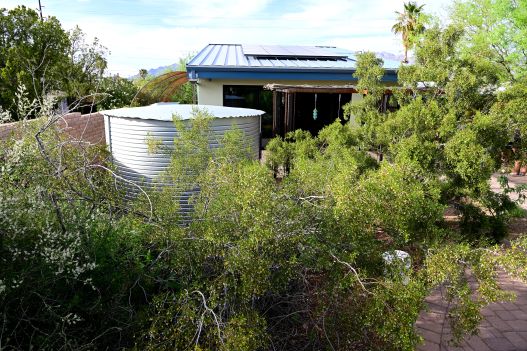
If Tucson residents can achieve a water usage goal of 40 gallons per capita per day (GPCD), then we can end our dependency on Colorado River water. Tucson has already made great strides in reducing water consumption. In the mid-1990s, GPCD was 121, but we are already down to 72 GPCD. It is clear that this hydro-local water budget is achievable, and we are proving it every day at our Living Lab and Learning Center, where the majority of our water supply is from collected rainwater–and this can be replicated across the Colorado River Basin and beyond!
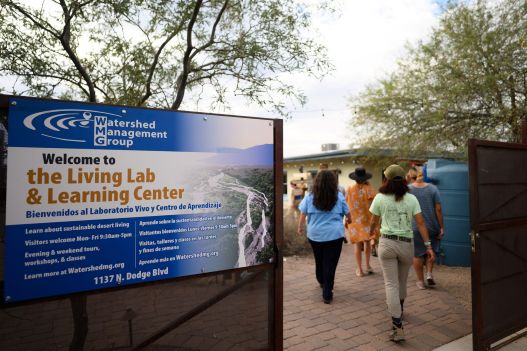
Thousands of people are living this same hydro-local lifestyle at their homes. They are doing so by harvesting rainwater and greywater, planting native species instead of water-hungry invasives, installing composting toilets, participating in our river restoration workshops, and even simple measures like taking shorter showers.
By curbing our demand and ensuring that our local economy is scaled to our water supplies, we can thrive with the water that we get from annual precipitation and not take water from the Colorado River or diminish our local groundwater supplies. To do so, we need to have economic plans and development policies that welcome businesses and industries that contribute to our watershed and be clear that large water users that deplete our aquifers and rivers are not appropriate for our desert cities.
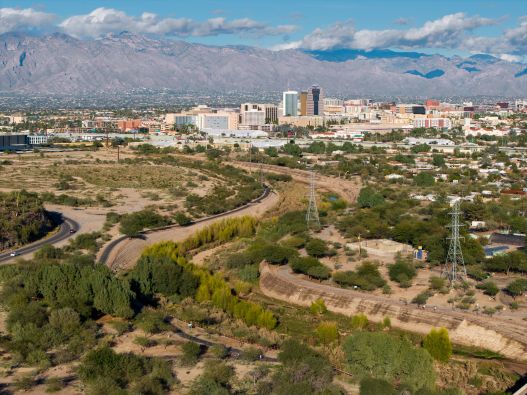
Indigenous people have lived in the Tucson area since time immemorial because of perennial waters of the Santa Cruz River and the extensive wetlands, forests, and agriculture it supported. Those flows dried up in the early 1900s due to overpumping of groundwater and poor development practices by colonial immigrants. We’ve done a ton of work to return flows to the Santa Cruz and its tributaries–and we think that we can continue to bring back our flows without dependency on the Colorado River water that comes via the Central Arizona Project. It all depends on how we choose to value water locally and who we allow access to our most precious natural resource.
Right now, I’m seeing a ton of news articles that paint water cuts as dire and scary. I disagree! What’s dire to me is a future with no Colorado River for children and future generations. I’ve known that we’ve needed to shift away from using Colorado River water supplies for a long time, and Watershed Management and the Tucson community have been preparing for this moment. This is the time for communities across Arizona and the Colorado River basin to come together to recognize the Colorado River is not a commodity to be depleted but a lifeforce that now needs our care and preservation in the face of a warming climate.
We need to move forward together with the best hydro-local planning for the system that exists. We need our state and local governments to be transparent and inclusive in what our water budgets look like and not seek private investment from large water users that don’t match our local water supplies. We need to make sure that we honor the settlements with our Tribal partners first and foremost, ensuring that they are prioritized in any deal that is made on how water is used in the Colorado River Basin.
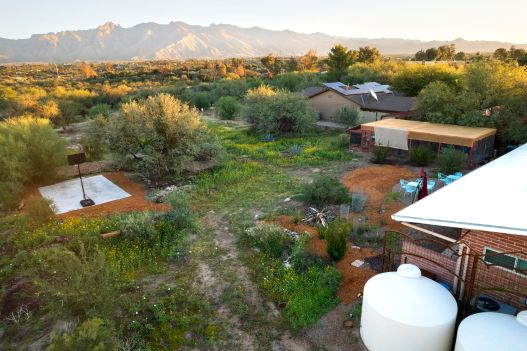
Big change is coming, but we at Watershed Management Group are not afraid. In Tucson and the Sonoran Desert, people have not only survived here, but thrived here, eating the plentiful native foods, growing crops along the rivers, and developing vibrant traditions in tune with the seasons, lean times, and abundant times.
The desert people have learned how to harvest and store the rains for future times. They have learned how to conserve water for life-giving purposes, drinking, bathing, sustenance, and community needs. These lessons can benefit us all, and Tucsonans can and do continue these sustainable practices in the face of challenges.
We are prepared to lean into a hydro-local future and to thrive and nourish this amazing desert we call home. We are one watershed!