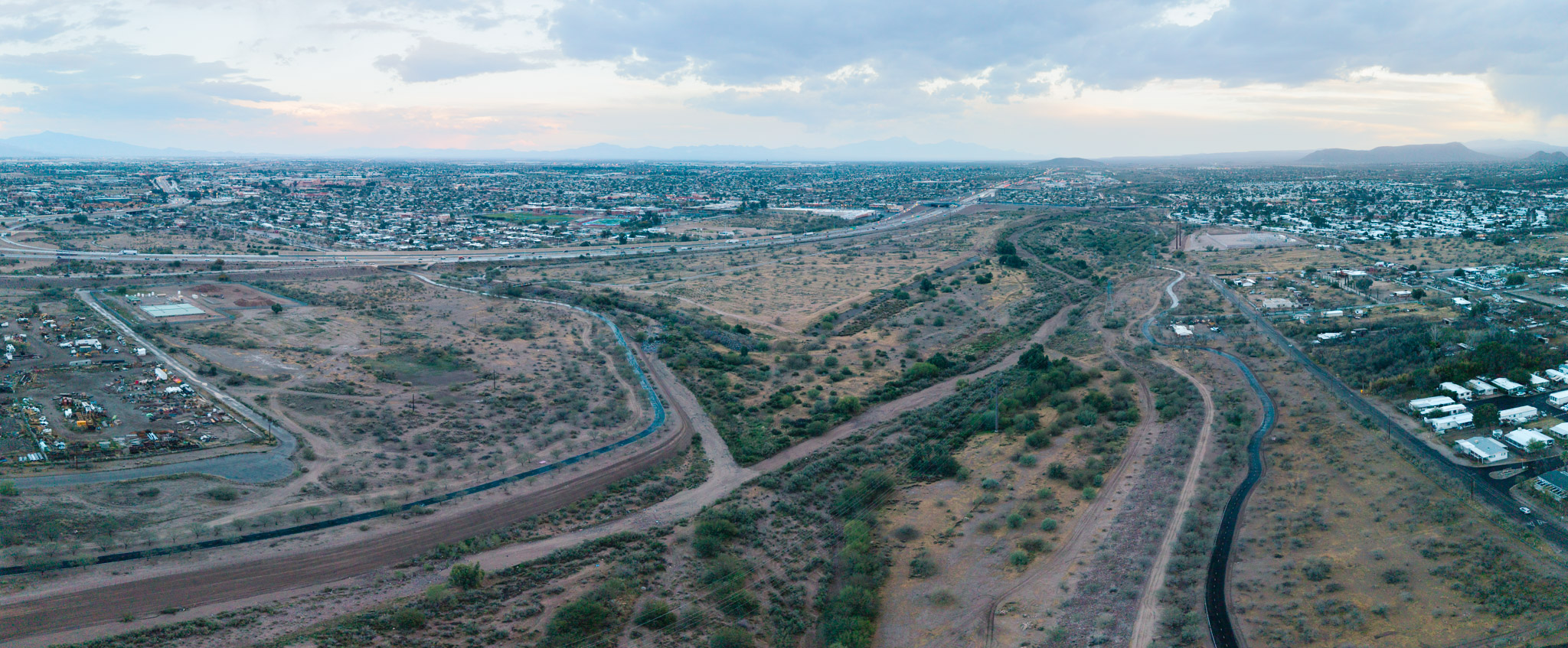
Community backlash to data centers is rising, especially here in the Santa Cruz watershed, where we are navigating a 32-year drought with rainfall well below historic averages. The battle to hold companies accountable to the same conservation standards that we ask of our community members is particularly important. But for the average person in a data-center impacted community, information and resources can be a challenge to come by.
Suzette Rosher is a resident of Green Valley, where not one but TWO data centers are being planned in a community that lacks the kinds of organizations, journalists, and community organizers that contribute to ensuring transparency and visibility. Suzette reached out to WMG to ask for support, resulting in Education Specialist Melanie Cooley presenting on the impact of data centers and our own experience fighting Project Blue to a room of more than 200 concerned Green Valley residents in June. The information presented included:
- Since 2000, 16 years have been below average for rainfall in our region, including 8 of our 20 driest years on record
- More than 2/3 of operating data centers and half of planned ones are located in drought-stricken regions
- Water discharged from data centers can contain PFAS, contributing to an existing crisis in our already fragile watershed.
While the proposed benefits of data centers are diffuse and global, the very real resources that they use are finite and local. And in our already drought-stricken region, every gallon that is diverted to cool a server is a gallon that won’t be used to recharge the soil, nourish shade-producing native plants and trees, sustain our river ecosystems, or remain available for use by future generations.
The fight against big data in our region is just beginning. While they have money and time on their side, we have knowledge and vision: a vision of free-flowing rivers and a cooler watershed driven by common-sense water use policies and a hydro-local approach to conservation. Your support for our Summer Campaign today will help us make this vision a reality.